

Vintage Japanese Ainu Bear Kuma Horiguma w/ Salmon Cedar 13”
Vintage Japanese Ainu Bear Kuma Horiguma w/ Salmon Cedar 13”
Couldn't load pickup availability
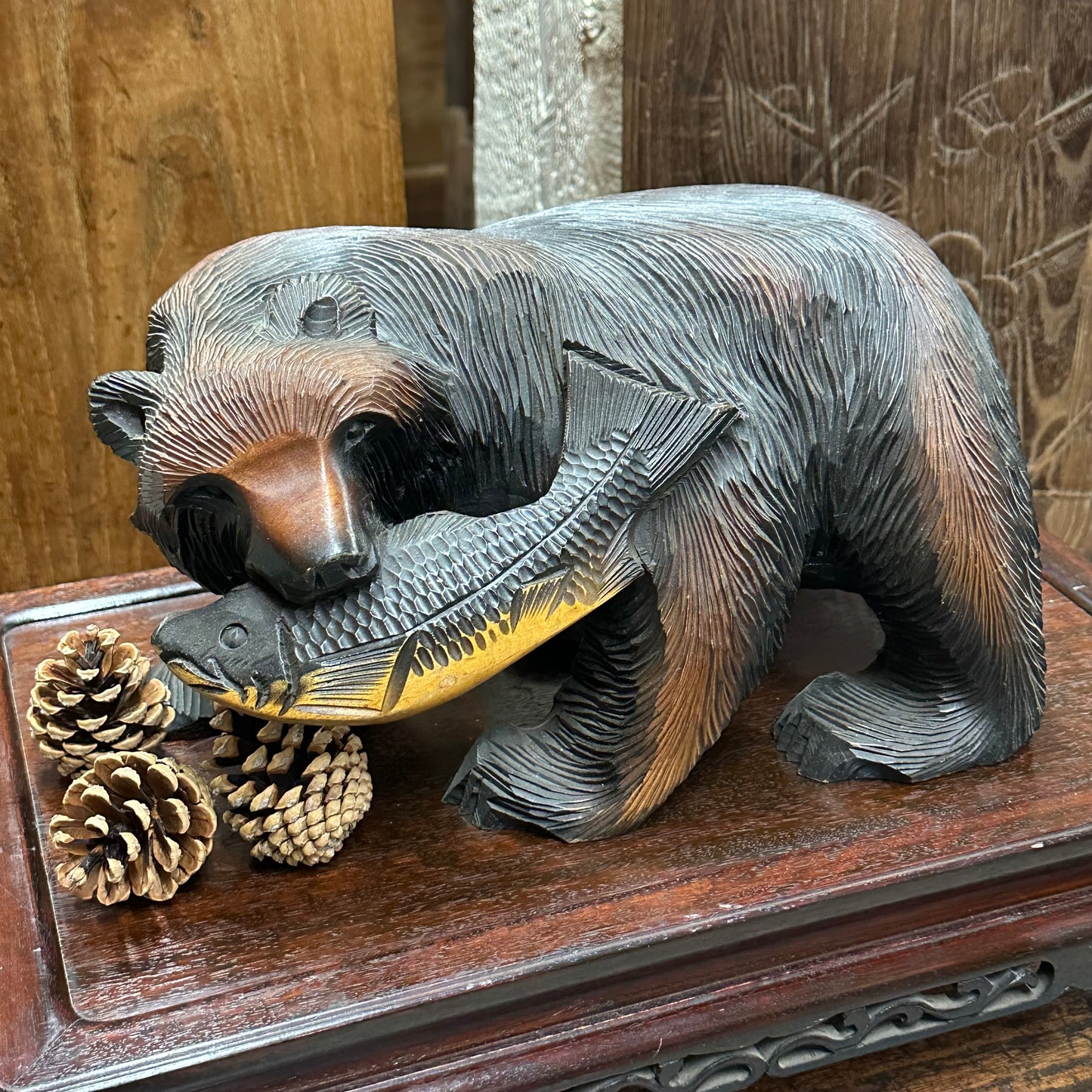
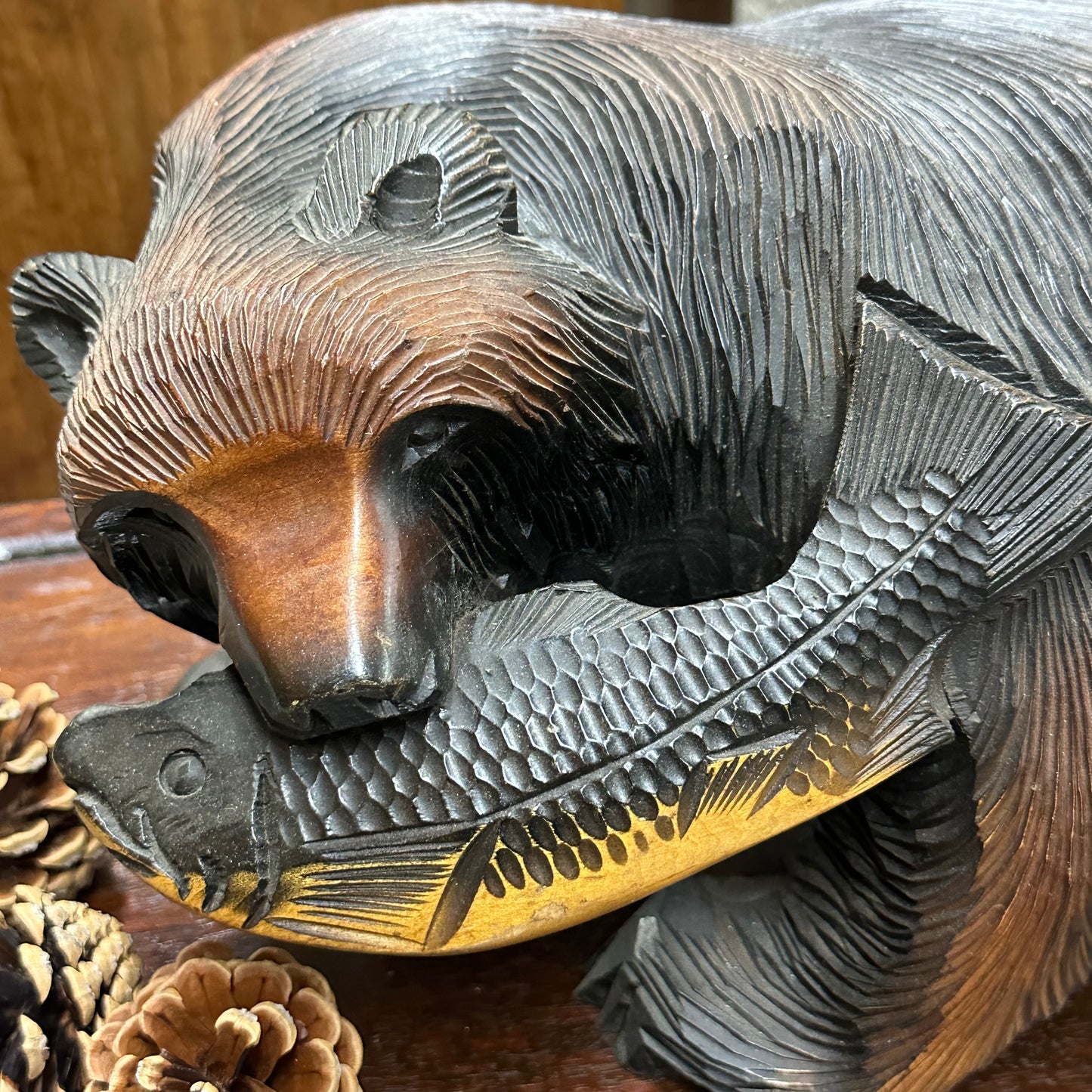
This vintage Japanese carving (mid-late 20th century) was created by the indigenous Ainu people now mainly on the northern Japanese island of Hokkaido. The Ainu people traditionally carved these Kubori Kuma for religious purposes revering the Bear as a deity. Tinted red on the head and neck. Salmon in mouth.
This statue measures about 7" tall by 13" long by 7" wide. The carving shows some signs of wear but is overall in very good condition. Most likely carved from Japanese cedar.
A finely hand-carved wooden bear clutching a salmon in its jaws, a classic motif rooted in the traditions of the Ainu people of northern Japan. These sculpted bears—known collectively as Higuma-zukuri (木彫熊)—represent one of the most recognizable and beloved forms of Hokkaidō folk art, merging spiritual reverence with regional craftsmanship.
In Ainu cosmology, the bear (kimun kamuy, “mountain god”) was regarded as one of the most powerful deities, descending from the divine realm in animal form to provide food, fur, and blessings to humankind. The salmon it holds symbolizes prosperity, renewal, and gratitude—core elements of the Ainu worldview, which honors harmony and reciprocity between people and the natural world.
Originally inspired by the Iomante (bear-sending ceremony), these carvings came to embody the enduring bond between humans and the spirit world. From the early 20th century onward, Ainu and Hokkaidō artisans refined the tradition, developing distinct regional styles—from naturalistic and highly detailed examples with lifelike fur texture to more rustic, stylized interpretations emphasizing form and energy.
Carved from native woods such as katsura, icho (ginkgo), or keyaki (zelkova), each piece carries a warmth and vitality that reflects its maker’s hand. The bear’s forward motion and intent gaze convey strength and guardianship, while the fish represents abundance and sustenance.
Details:
-
Origin: Hokkaidō, Japan
-
Period: 20th century (Taishō–Shōwa era and later)
-
Material: Carved wood, hand-finished
-
Subject: Bear (higuma) with salmon
-
Symbolism: Strength, prosperity, divine blessing
-
Condition: Varies by piece; minor age wear consistent with use and handling
Today, Ainu bear carvings are appreciated both as expressions of indigenous spirituality and as iconic symbols of Hokkaidō craftsmanship—bridging cultural heritage and modern folk art collecting.