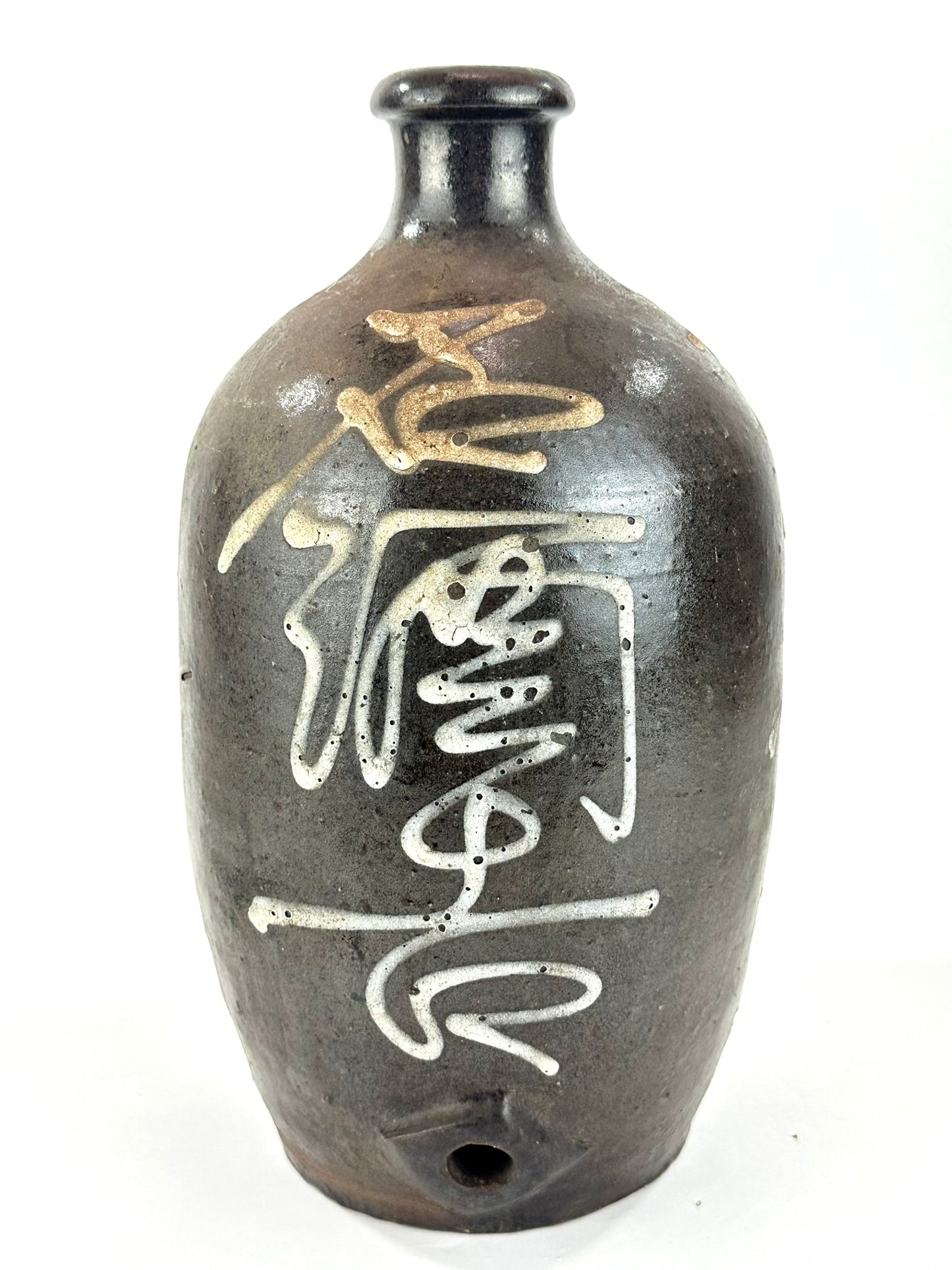


Antique Japanese Edo-Meiji 1800's Dark Glazed Stoneware Tokkuri Sake Jug White Calligraphy 13"H
Antique Japanese Edo-Meiji 1800's Dark Glazed Stoneware Tokkuri Sake Jug White Calligraphy 13"H
Couldn't load pickup availability
Antique Japanese Dark Glazed Stoneware Tokkuri Sake Jug White Slip Calligraphy Tap Hole Meiji 12.75"H
Japan | Late Edo to Meiji Period, 19th century
A dark iron-brown glazed stoneware tokkuri (徳利) of classic proportions, the rounded body tapering to a narrow neck with rolled lip. The exterior carries bold merchant or brewery calligraphy applied in white slip — the brushwork sweeping and confident, identifying the commissioning establishment in the manner standard to commercial sake vessels of the period. A lower tap hole is present near the base, indicating this vessel was mounted and dispensed from a barrel or cask fitting rather than poured by hand — a configuration associated with izakaya and commercial sake service. The dark glaze is rich and even with subtle surface variation from firing.
The tokkuri (徳利) is among the most ubiquitous ceramic forms in Japanese material culture — a narrow-necked stoneware bottle produced in vast quantities from the Edo period onward for the storage, transport, and service of sake. Smaller examples were warmed in hot water and brought to the table for shared service alongside ochoko cups, while larger commercial tokkuri functioned as branded dispensing vessels for sake breweries (sakagura), merchants (sakaya), and drinking establishments (izakaya). Each establishment commissioned tokkuri bearing their house name in bold calligraphy — iron-black on grey glaze, or white slip on dark stoneware — making every bottle a portable advertisement and guarantee of provenance. Regional kiln traditions across Japan each brought their own clay bodies and glaze characters to what was fundamentally a common utilitarian object. Surviving antique tokkuri retaining legible merchant calligraphy are genuine artifacts of Edo and Meiji commercial culture.
Dimensions: 7"W × 12.75"H Condition: Antique, consistent with age and use. Surface wear, kiln flaws and minor staining consistent with working use. Examine photos carefully for condition details.