

Antique Japanese Iron Tsuba Karakusa Gold Zogan Kiku Diagonal Edo Kiri Box 3"dia
Antique Japanese Iron Tsuba Karakusa Gold Zogan Kiku Diagonal Edo Kiri Box 3"dia
Couldn't load pickup availability
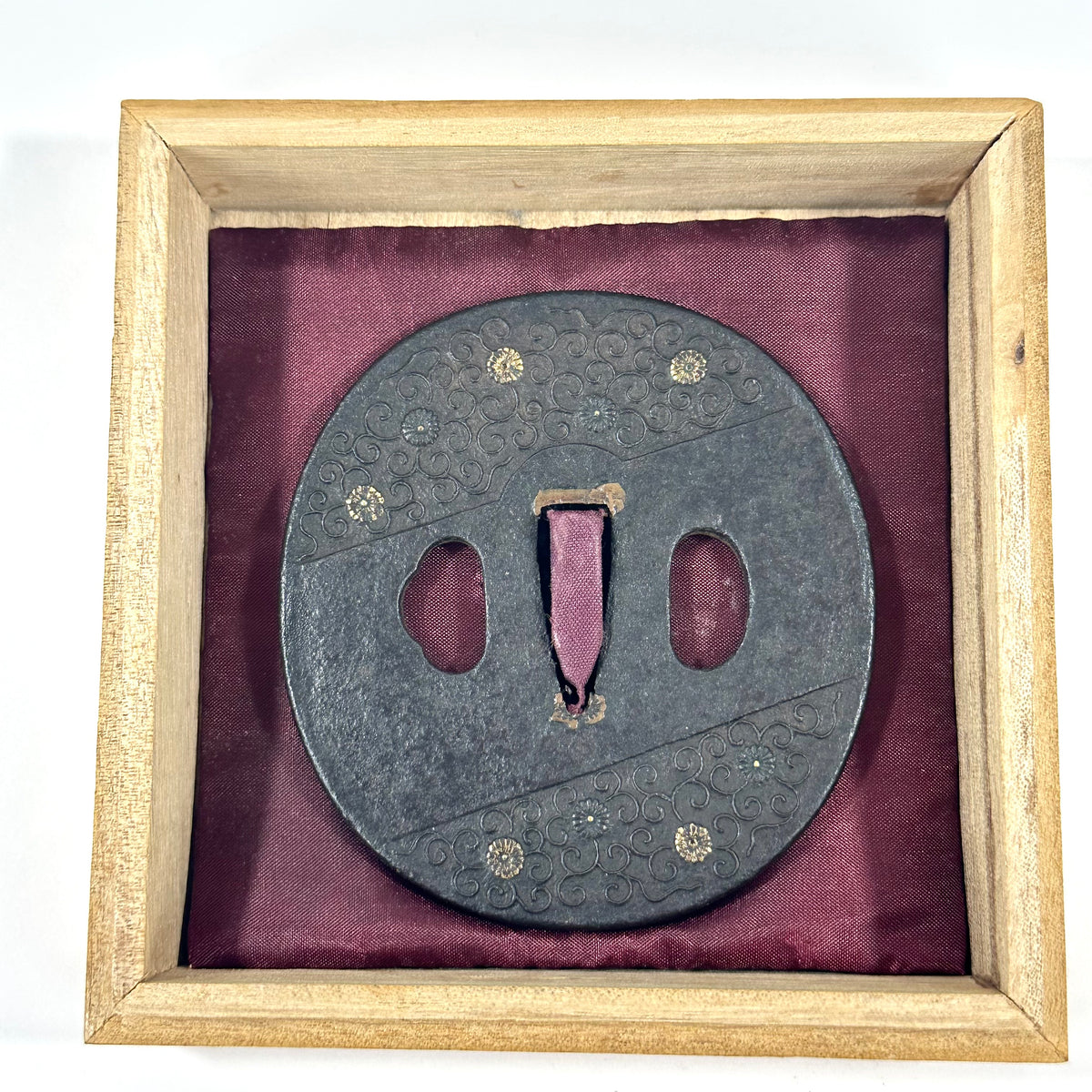
Japanese katana tsuba (鍔), maru-gata round form, iron with engraved karakusa arabesque and gold-inlaid (zogan) kiku chrysanthemum, diagonal two-register composition, kiri paulownia presentation box, Edo period
Japan; Edo period, 18th–19th century
A Japanese katana tsuba (鍔) in maru-gata (丸形) round form, worked in iron with a finely textured black surface, the face organized in a diagonal two-register composition — upper and lower zones divided by an engraved diagonal line, a format evoking the contrast of sky and earth or the division of seasons. Both zones carry a continuous finely engraved karakusa (唐草) arabesque scroll ground from which kiku chrysanthemum flower heads emerge at intervals: some rendered flush in engraved iron, others executed as raised gold-inlaid zogan (象嵌) rosettes that read with sharp brilliance against the dark ground. The gold inlay is well-preserved throughout. The nakago-ana retains remnants of a copper or shakudo sekigane fit-plug; two hitsu-ana flank the blade opening. Presented in a fitted kiri (桐) paulownia wood box with purple silk lining — the same box format as the companion kiku hanazume copper tsuba, suggesting these two pieces may have been collected or presented together.
The combination of engraved karakusa ground with selective gold zogan accent — using precious metal inlay sparingly for maximum contrast rather than covering the surface — is a hallmark of accomplished Edo-period iron tsuba work, where the quality of the ironwork itself is the primary medium and inlay serves as punctuation.
- Form: Tsuba (鍔), maru-gata (丸形) round sword guard
- Material: Iron with gold zogan (象嵌) inlay; sekigane remnant at nakago-ana
- Decoration: Diagonal two-register composition; engraved karakusa arabesque ground with iron and gold-inlaid kiku flower heads
- Hitsu-ana: Two (kozuka and kogai sides)
- Mark: Confirm maker’s signature or attribution on reverse in hand
- Period: Edo period, 18th–19th century
- Dimensions: Approximately 3″dia (7.6 cm) — confirm in hand
- Provenance: Fitted kiri paulownia presentation box with purple silk lining
- Condition: Iron surface sound with age-appropriate patina; gold zogan inlay intact and crisp; sekigane remnant present at nakago-ana. Please see photos for details.