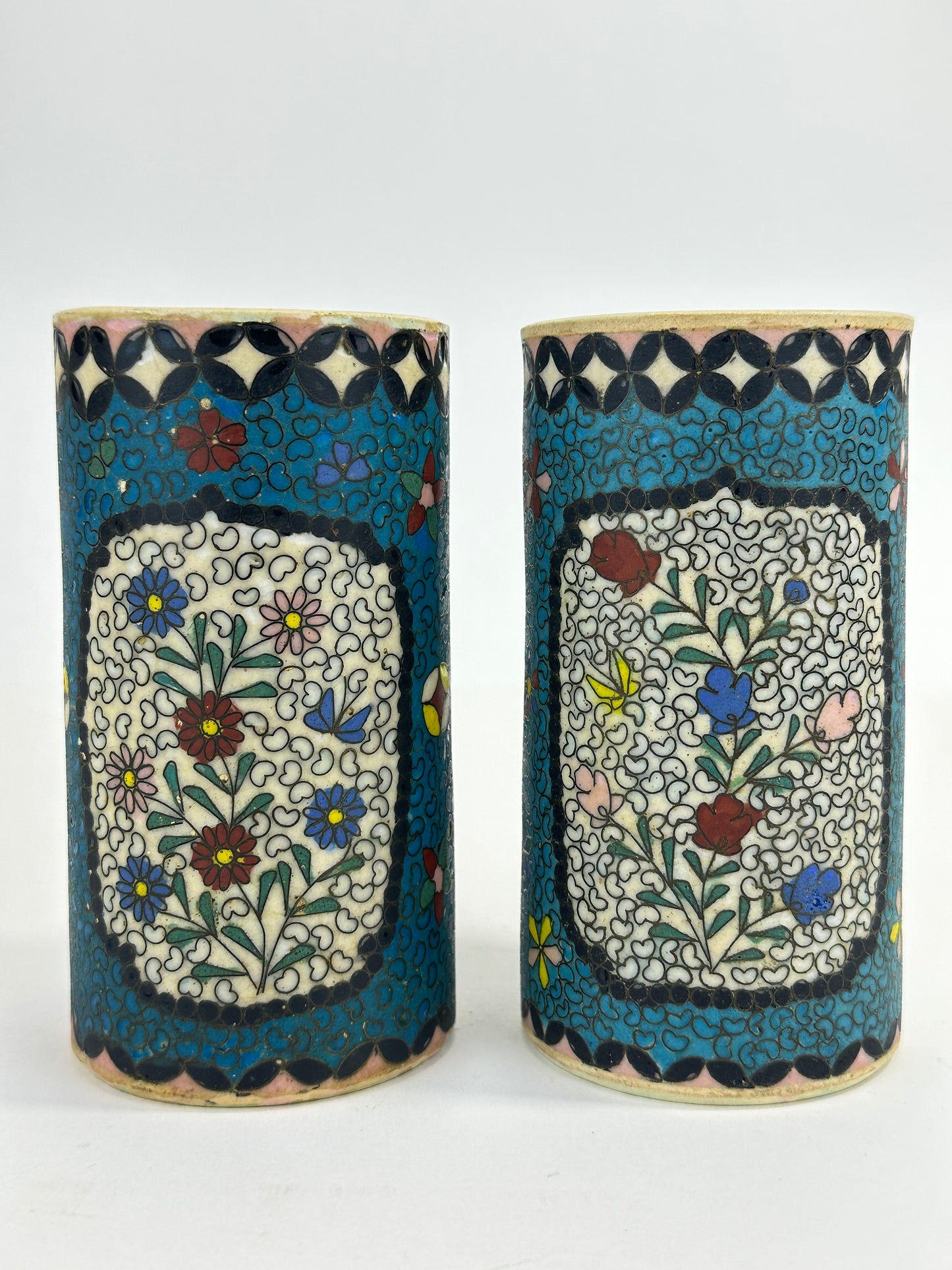


Antique Japanese Kinkozan Style Cloisonné Brush Pots Pair 5.25"H
Antique Japanese Kinkozan Style Cloisonné Brush Pots Pair 5.25"H
Couldn't load pickup availability
Antique Japanese Cloisonné Enamel Brush Pots in Kinkōzan Style
Japan, Meiji period (circa 1880s–1900s)
Dimensions: 5 1/2″H × 2 5/8″ diameter (13.3 × 6.7 cm)
This pair of antique Japanese cloisonné enamel brush pots (筆筒 fudezutsu) is executed in the richly detailed Kinkōzan-style associated with late Meiji-period Kyoto production. Cylindrical in form, each vessel features framed floral panels set against a turquoise blue ground densely filled with scrolling motifs rendered in fine wire cloisonné.
The ground decoration reads as a continuous net or textile-like pattern rather than botanical imagery, a hallmark of high-quality Meiji cloisonné where surface density and visual rhythm were prized. The central panels present delicate flowering stems in polychrome enamels, carefully outlined with dark wire and balanced by formal border bands at the rim and base.
This style is closely associated with the Kinkōzan workshop tradition, known for its intricate wirework, saturated enamels, and painterly handling of floral subjects. While often attributed broadly as “Kinkōzan cloisonné,” such pieces were produced both by the Kinkōzan firm itself and by closely related Kyoto workshops working in the same idiom for domestic and export markets.
The bases bear small iron-red marks that are present but not legible, and should be regarded as workshop or decorator marks rather than signed artist seals. No definitive maker attribution is claimed.
Originally intended for use in a scholar’s studio or writing desk, these vessels would have held calligraphy brushes or writing implements. Today, they function equally well as decorative objects, small vases, or refined accents within a Japanese or eclectic interior.
Condition: Very good antique condition with light rim wear, minor enamel pitting, and expected kiln-related irregularities consistent with age. No cracks or structural damage observed.
An elegant and finely worked Meiji-period cloisonné pair, representative of the Kinkōzan tradition and well suited for collectors of Japanese decorative arts or classic scholar’s objects.