

Antique Japanese Ryogaeya Kanban Carved Keyaki Currency Exchange Signboard Edo Meiji 23"H
Antique Japanese Ryogaeya Kanban Carved Keyaki Currency Exchange Signboard Edo Meiji 23"H
Couldn't load pickup availability
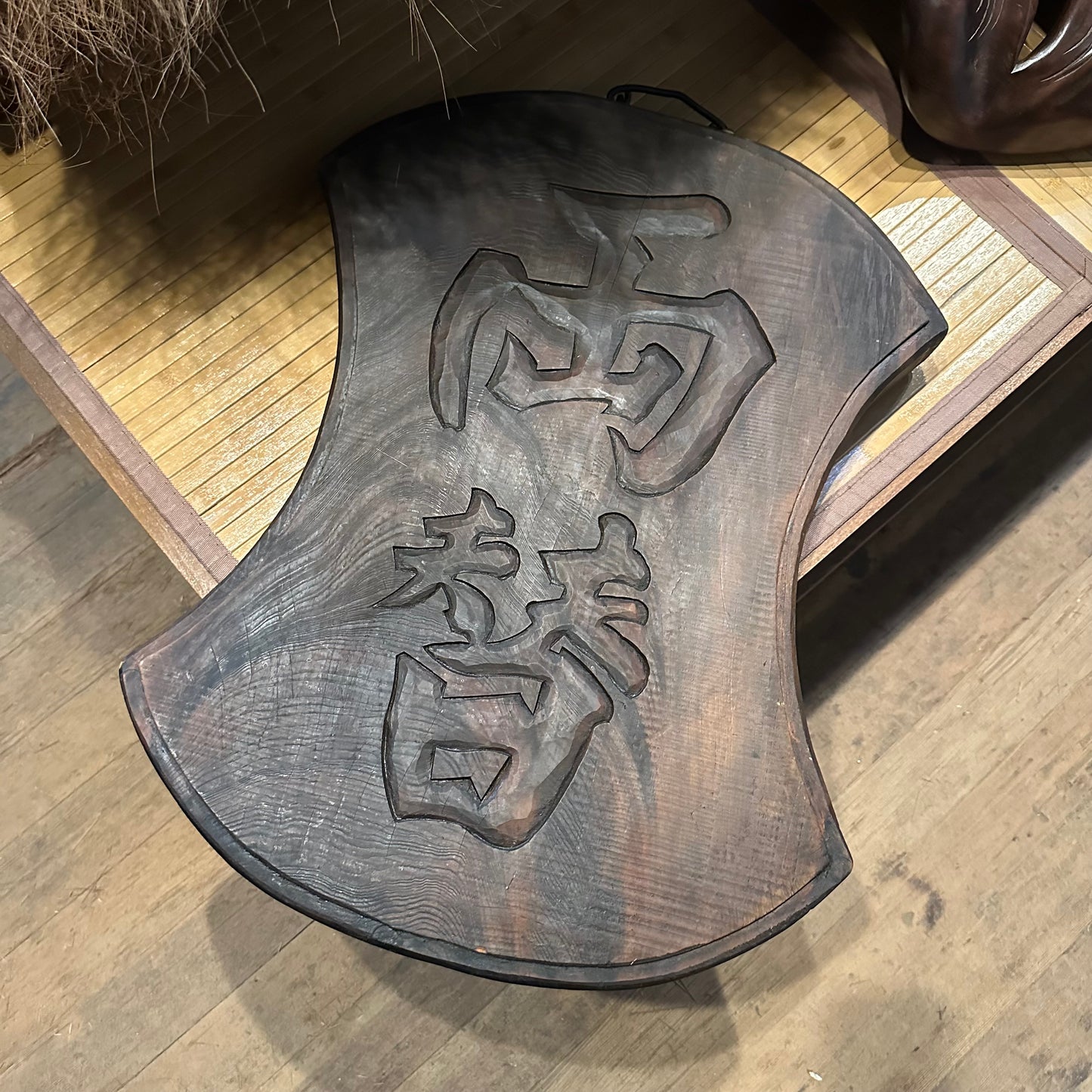
Japanese katachi kanban (形看板) — carved keyaki signboard in the form of the ryōgae money exchange symbol, inscribed 両替 (Ryōgae — Currency Exchange)
Antique Japanese Edo–Meiji Era, 19th century
The two large relief-carved characters read 両替 (Ryōgae — "Currency Exchange"), identifying this as the kanban of a ryōgae-ya (両替屋) — a licensed money changing and exchange establishment, the private banking houses that were among the most powerful commercial institutions of Edo-period Japan. Ryōgae-ya exchanged gold, silver, and copper coinage, provided credit, and functioned as financial intermediaries in an era of complex multi-metal currency. Their kanban were marks of considerable standing.
The shape of the money exchange symbol derives from an ancient weight used to calculate the value of precious metals and became the recognized mark of a banking institution. The waisted hourglass silhouette — flaring at top and bottom, drawn in at the center — is therefore not merely decorative but functionally symbolic: the form itself announces the trade to any passerby, literate or not, before the carved characters are even read. During the Edo period, urban centers of Japan expanded and merchants used kanban to differentiate and advertise their shops, with craftsmen carefully carving, painting, and lettering signs that were mounted outside the store.
The keyaki ground is dense and deeply grained, the characters carved in bold relief and finished to a deep dark patina consistent with extended outdoor display and significant age. The original iron hanging hardware is intact at the crown. At five inches thick, this is a substantial three-dimensional object as much as a flat sign — the depth of the board giving it a sculptural presence that commands attention from any angle.
Produced largely during the Edo and Meiji eras, kanban were at the time regarded less as artworks than as functional placards, but collectors began preserving them as early as the late 19th century, and many are now in museum collections. As many were made of wood and subject to nature's forces, their survival rate was relatively low. A ryōgae-ya kanban of this scale, in keyaki, retaining its original form and hardware, is a genuinely rare survival.
- Type: Katachi kanban (形看板) — shaped symbolic signboard
- Inscription: 両替 (Ryōgae — Currency Exchange / Money Changer)
- Form: Waisted hourglass (ryōgae-gata) — the traditional symbol of money exchange establishments
- Construction: Carved keyaki; relief characters; original iron hanging hardware
- Dimensions: Approx. 18" W x 23" H × 2.25" thick
- Period: Edo–Meiji, 19th century
Condition: Very Good.
AxA