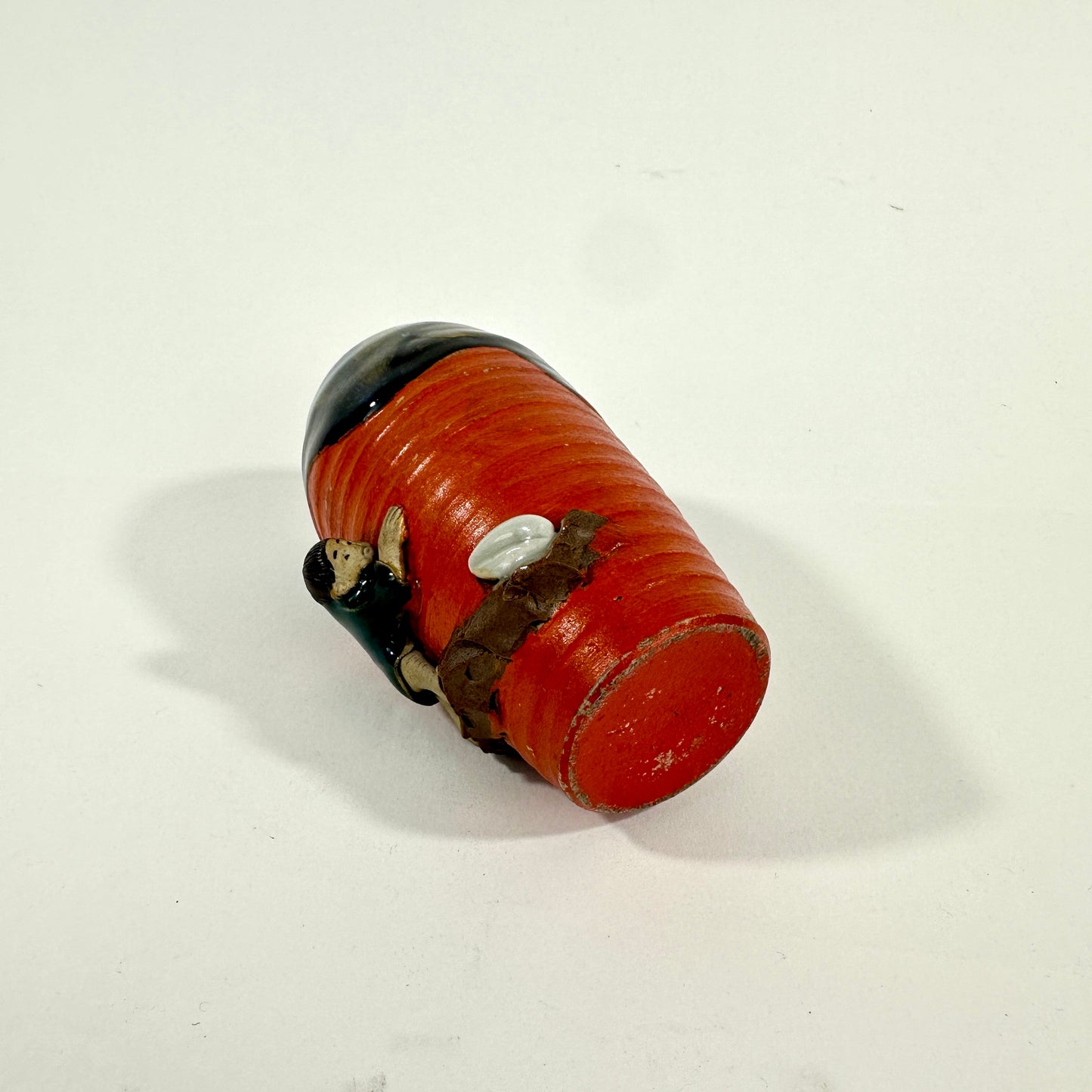


Antique Japanese Sumida Gawa Pottery Vase Figure Boy Red Orange Black Flambe Glaze Meiji 4.5"H
Antique Japanese Sumida Gawa Pottery Vase Figure Boy Red Orange Black Flambe Glaze Meiji 4.5"H
Couldn't load pickup availability
Japanese Sumida Gawa Pottery Vase Applied Figure Boy Red Orange Black Flambe Glaze Meiji 4.5 Inches
A characteristic and well-executed example of Japanese Sumida Gawa (隅田川) export pottery, the ovoid vase worked in the tradition's signature combination of vivid orange-red lava-textured ground and deep black tenmoku-style flambe glaze flowing dramatically over the upper shoulder and neck. Applied in full three-dimensional relief to the lower body is a single figure of a boy or young man in a teal-green glazed kimono, modeled with considerable expressiveness — head bowed, hands pressed flat against the vessel, crouching over a small white glazed round object on a rough brown rocky base, as if straining against the weight of the vase itself. The coiled ribbing texture of the red ground, the controlled drip of the black glaze over the orange, and the contrast with the precisely modeled figure are all hallmarks of quality Sumida production. A small accent of pink glaze appears at the shoulder.
Dimensions: 4.5"H × 2.5"W (11 × 6 cm) Weight: 1/2lb
Sumida Gawa pottery, known in Japan as Sumida Yaki (隅田焼), takes its name from the Sumida River in Tokyo's Asakusa district, where the workshops were first established. The style of applied figures on a surface with flowing glaze was invented about 1890 by the Seto potter Ryosai I, who worked in Tokyo from about 1875 to 1900. The ware was produced exclusively for Western export markets, with the bold applied figures, vivid glaze contrasts, and robust clay body proving immediately appealing to foreign collectors during the Meiji period. The original Asakusa kiln district was devastated by the fires following the Great Kantō Earthquake of September 1923; Ryosai III moved his manufacturing operation to Yokohama in 1924, where production continued briefly before eventually ceasing. Examples from the peak Meiji period Tokyo workshops are the most sought by collectors today.
Condition: Good; minor flaking to the red ground consistent with age. No chips to the applied figure. Black flambe glaze intact.
A lively and characterful Sumida Gawa vase — the single crouching figure straining against the vessel gives this example an unusual narrative quality within the genre.