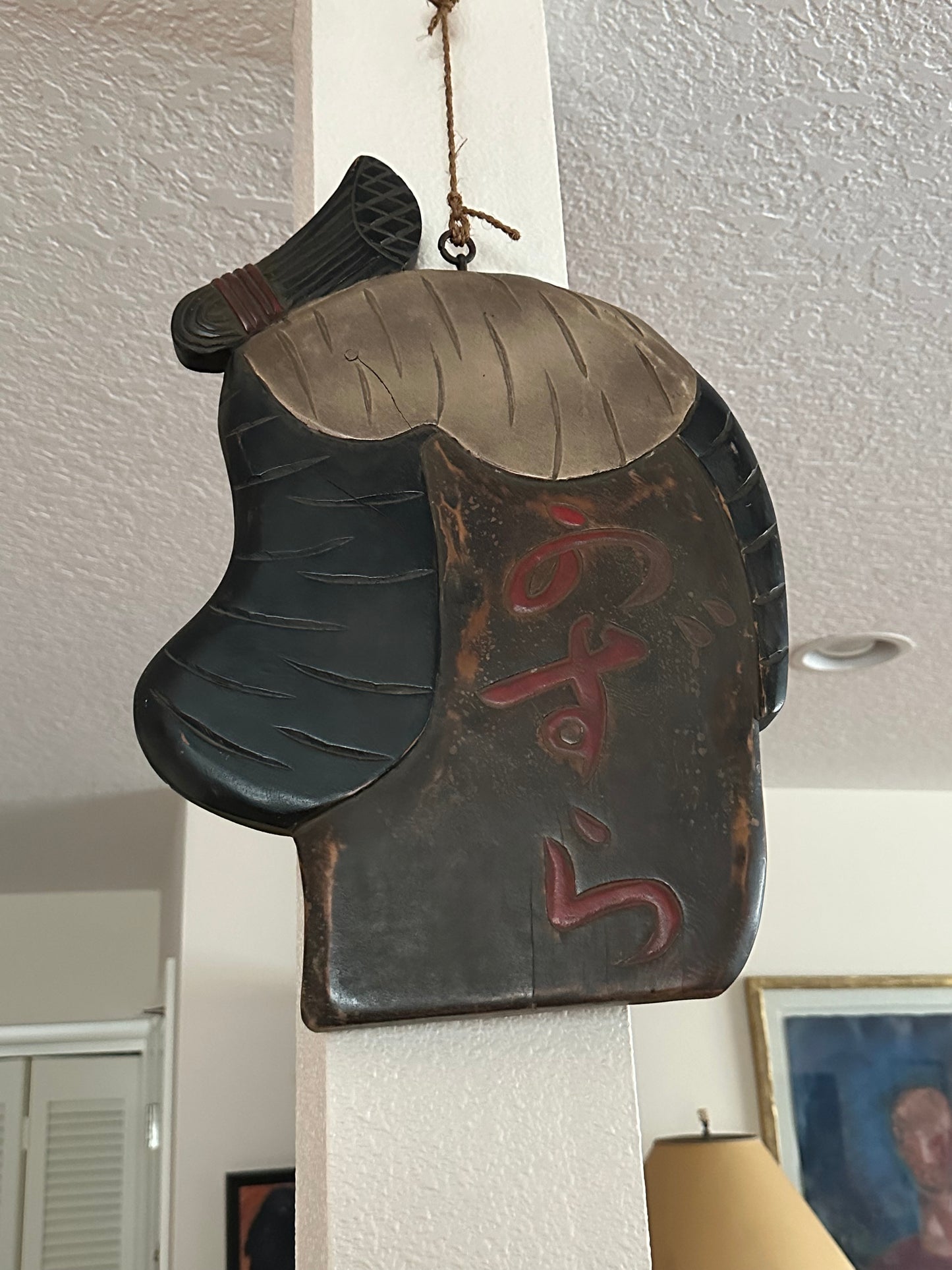


Antique Japanese Wig Shop Kanban Katsuraya Topknot Carved Lacquer Meiji 18"H
Antique Japanese Wig Shop Kanban Katsuraya Topknot Carved Lacquer Meiji 18"H
Couldn't load pickup availability
Japanese figural kanban (看板) — carved and lacquered wood signboard in the form of a man's head with chonmage topknot, for a katsuraya (鬘屋) wig and hairpiece shop
Antique Japanese Meiji Era, late 19th–early 20th century
Among the most inventive forms of Japanese commercial signage, the figural kanban made the product itself the advertisement. Here the silhouette of a man's head in profile — carved and lacquered wood with a chonmage (丁髷) topknot rendered in silver-grey lacquer over the crown and deeply carved black close-cropped sides — announces the trade at a glance. The chonmage, the traditional male topknot of the Edo period, was officially abolished with the Meiji modernization edicts of the 1870s, after which demand for chonmage wigs shifted primarily to the kabuki theater world and its associated wig-makers. A katsuraya serving that tradition would have been a specialist supplier to theatrical establishments, and a kanban of this quality reflects a house of standing. The hiragana かつらや (Katsuraya — "Wig Shop" / "Hairpiece House") is carved into the face ground and lacquered in red — the only text on the piece. The projecting carved element at the crown, lacquered black with copper wire binding, represents the folded and bound top of the chonmage itself rendered in three dimensions.
Kanban were created from wood, bamboo, iron, paper, fabric, gold leaf, and lacquer, evoking the frenetic market scenes of nineteenth- and twentieth-century Japan, where merchants created a multifaceted world of symbol and meaning designed to engage the viewer and entice the customer. Like any form of ephemera, relatively few old examples remain — destroyed by fire, corroded by weather, or discarded — and few museums collected them as they were not considered fine art. Figural kanban of this quality and legibility are among the rarest survivors of the form.
The overall patina — warm dark browns with areas of silver-grey lacquer on the topknot — is consistent with significant age and use. Original jute hanging cord intact.
- Type: Katachi kanban (形看板) — figural shop signboard
- Inscription: かつらや (Katsuraya — Wig Shop / Hairpiece House), red lacquer hiragana
- Construction: Carved wood with dark, silver-grey, and red lacquer; three-dimensional chonmage element with copper wire binding; jute hanging cord
- Dimensions: Approx. 18" H
- Period: Meiji, late 19th–early 20th century
Condition: Very good — no lacquer losses, cracking, or issues with the topknot element. See photo for condition details.