

Antique Japanese Wooden Statue of Bishamonten Guardian Edo Period 17th-19th C. 22" Tall LS#047
Antique Japanese Wooden Statue of Bishamonten Guardian Edo Period 17th-19th C. 22" Tall LS#047
Couldn't load pickup availability
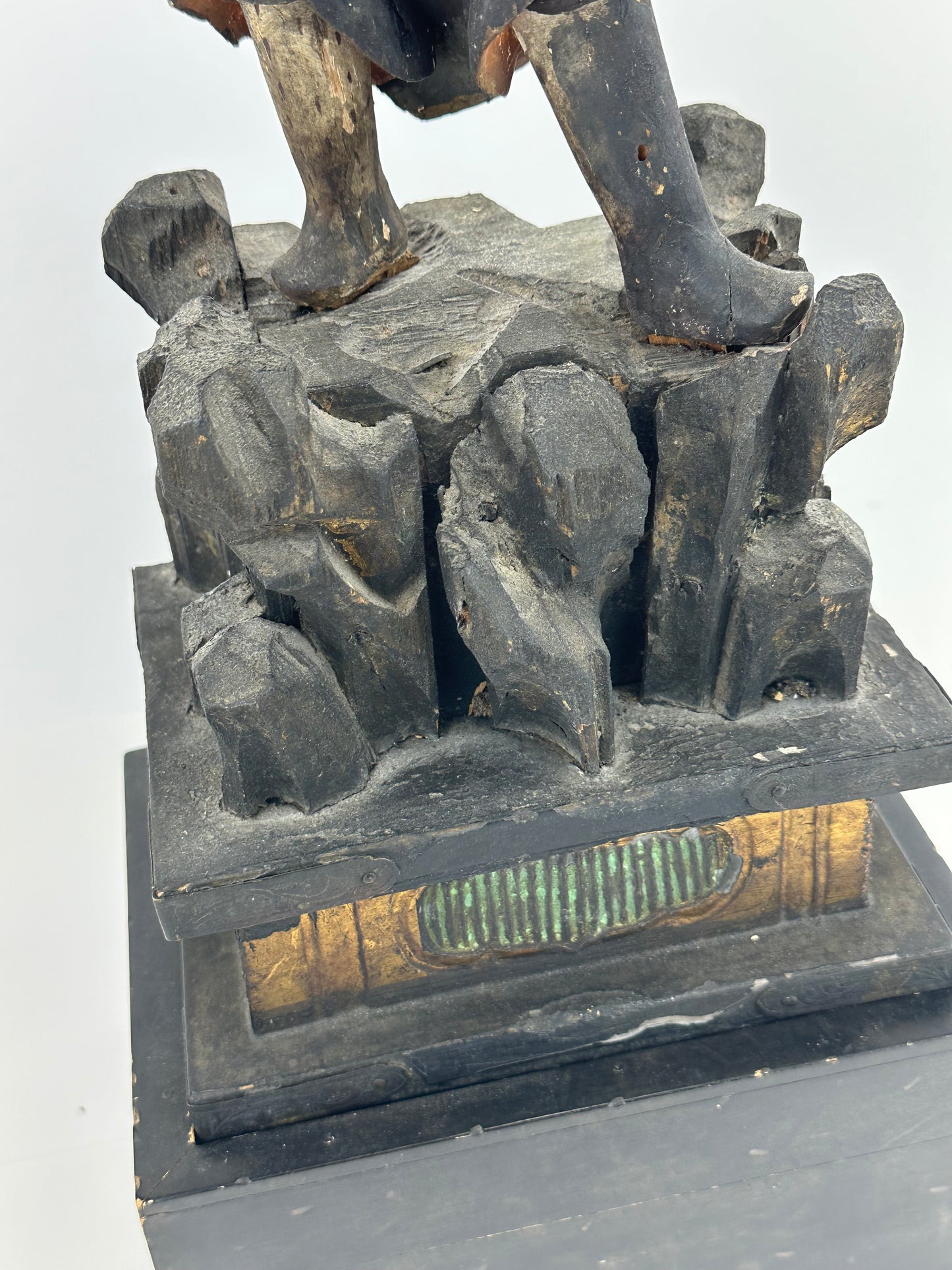
A commanding antique Japanese carved wooden statue of Bishamonten (毘沙門天), the Buddhist Guardian of the North and one of the Four Heavenly Kings (Shitennō). Depicted as a divine warrior standing atop a rugged mountain base, Bishamonten embodies protection, courage, and the triumph of good over evil.
This expressive figure is carved in wood and retains traces of its original polychrome, gilt, and lacquer decoration. The deity’s face, with its fierce yet composed expression, reflects the balance between wrathful strength and divine wisdom. The figure wears layered armor and celestial garments, and once held a spear or trident in the raised right hand and a pagoda (stupa) in the left — the latter symbolizing the treasure house of spiritual and material wealth under his divine protection. A metal nimbus (halo) crowns the figure, further affirming his celestial nature.
The reverse of the figure still bears ink-painted decoration on the armor, and the base retains its gilded and green-painted panel details. Though showing signs of age, surface wear, and stable cracks, the sculpture remains structurally sound and highly evocative of Edo period Buddhist temple art.
Beyond his Buddhist identity as a guardian deity, Bishamonten also holds an honored place among the Shichifukujin (七福神), Japan’s Seven Gods of Good Fortune, where he represents prosperity through righteous action and success achieved with integrity. In this aspect, Bishamonten was especially revered by samurai and merchants alike.
-
Subject: Bishamonten (Vaiśravaṇa), Guardian of the North, one of the Shichifukujin
-
Material: Wood with polychrome, gilt, lacquer, and metal nimbus
-
Origin: Japan
-
Period: Edo Period (17th–19th century)
-
Dimensions: 22" high × 8" wide × 6" deep (56 × 20 × 15 cm)
-
Condition: Age-appropriate wear; surface cracking, pigment and gilt losses, oxidation to metal; structurally stable and visually striking.
This rare and powerful sculpture captures Bishamonten’s dual essence as both a protector of the Buddhist realm and a bestower of good fortune, embodying the spiritual vigor and artistic mastery of late Edo Japan.