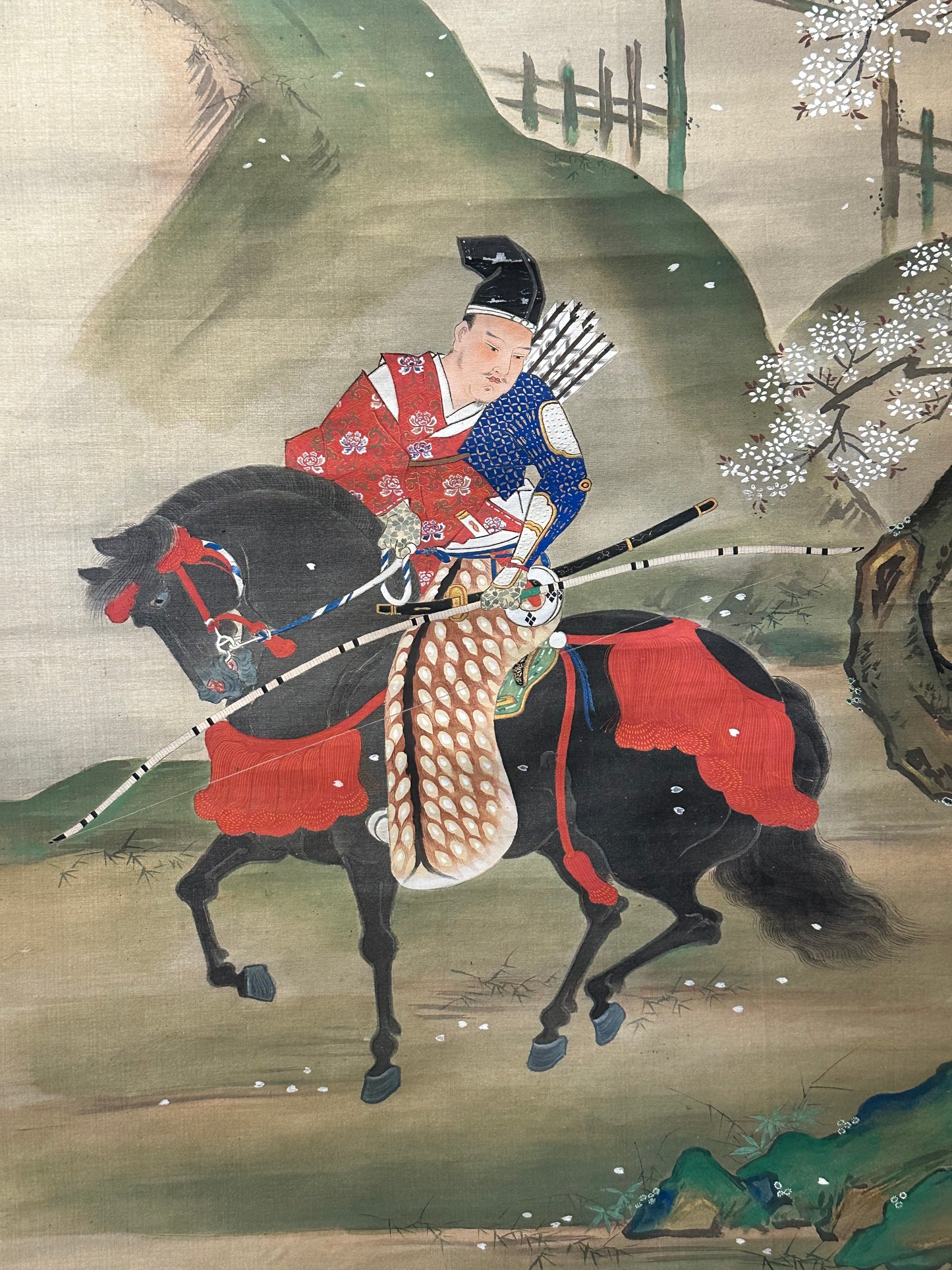


Japanese Antique Scroll by Shūhō Hand Painted Samurai Minamoto Kakejiku 73"
Japanese Antique Scroll by Shūhō Hand Painted Samurai Minamoto Kakejiku 73"
Couldn't load pickup availability
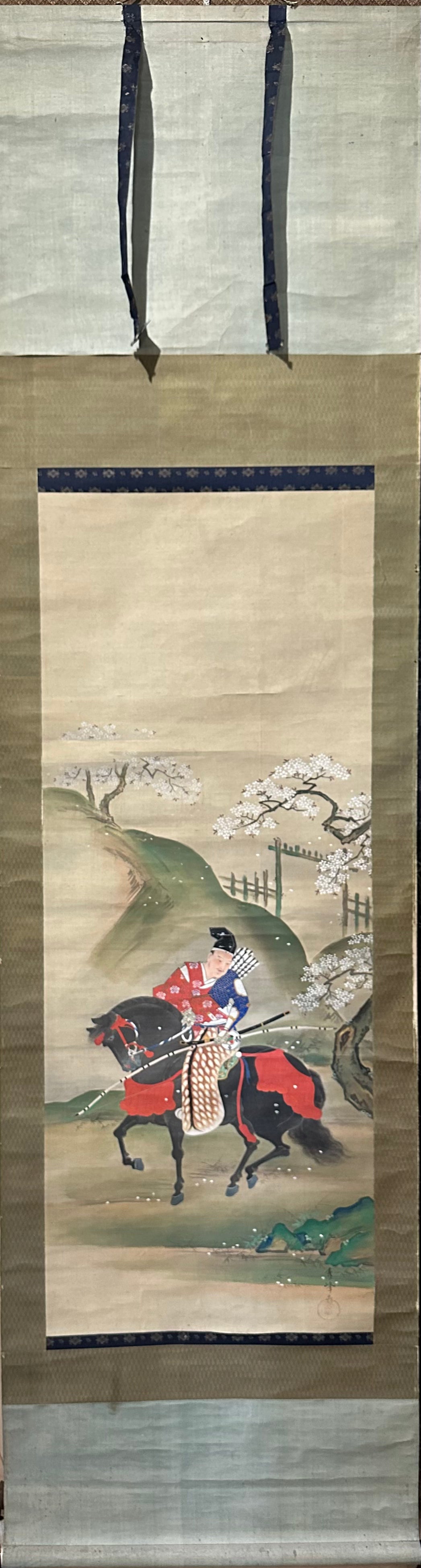
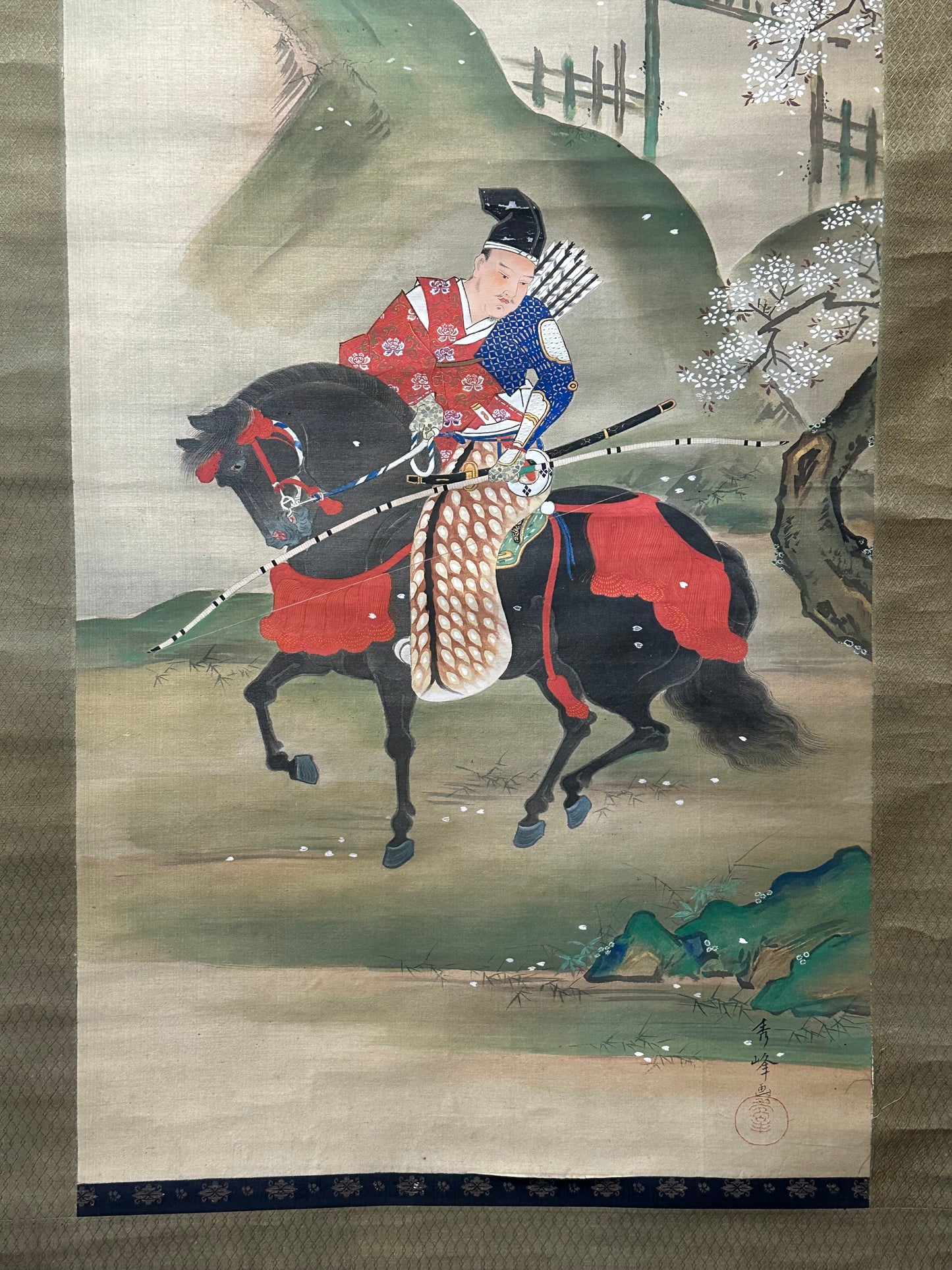
Antique Japanese Hanging Scroll, Minamoto no Yoshiie on Horseback, Signed Shūhō (秀峰)
Japan, Meiji period (明治時代), c. 1870–1890
Overall: 73" H × 21" W (185 cm × 53 cm)
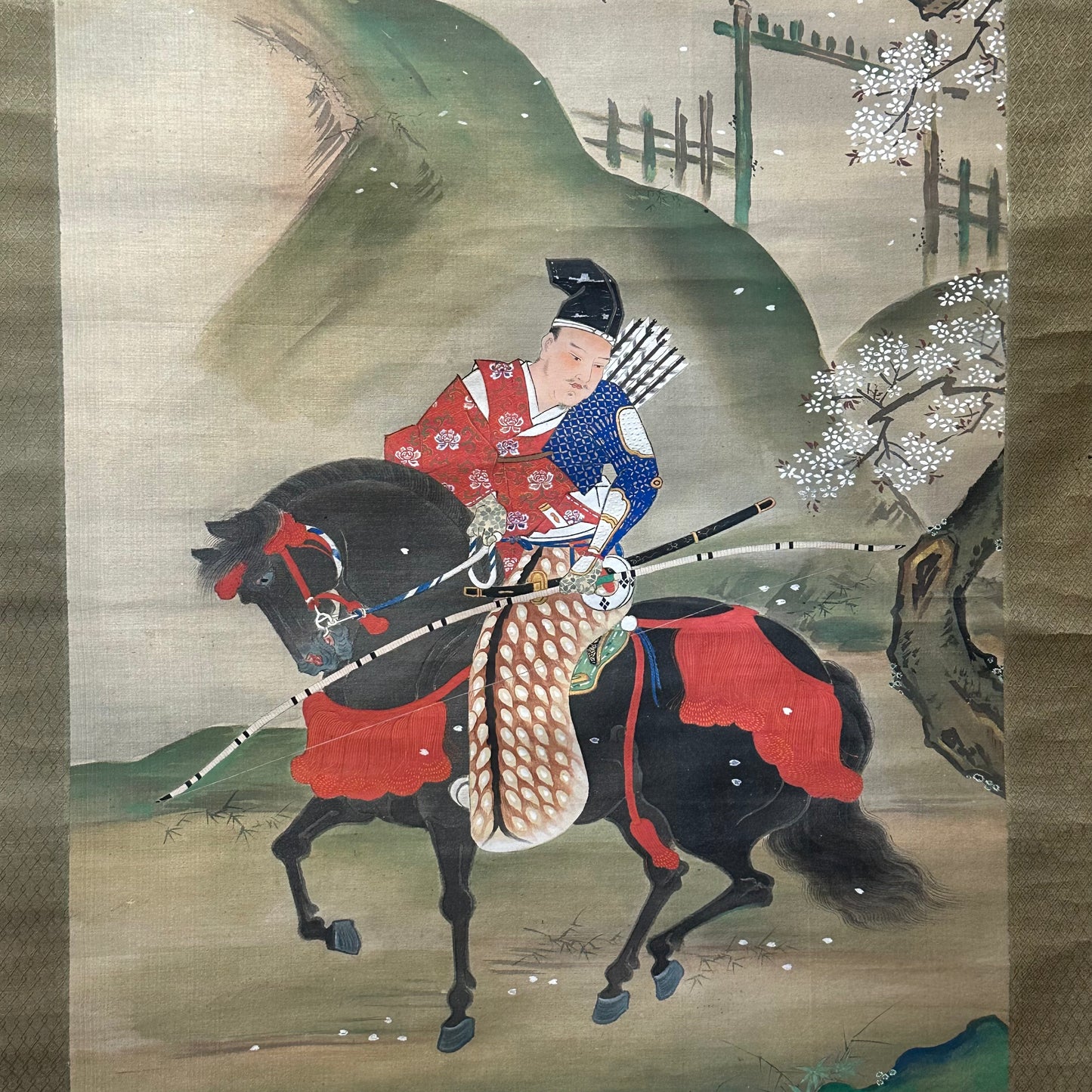
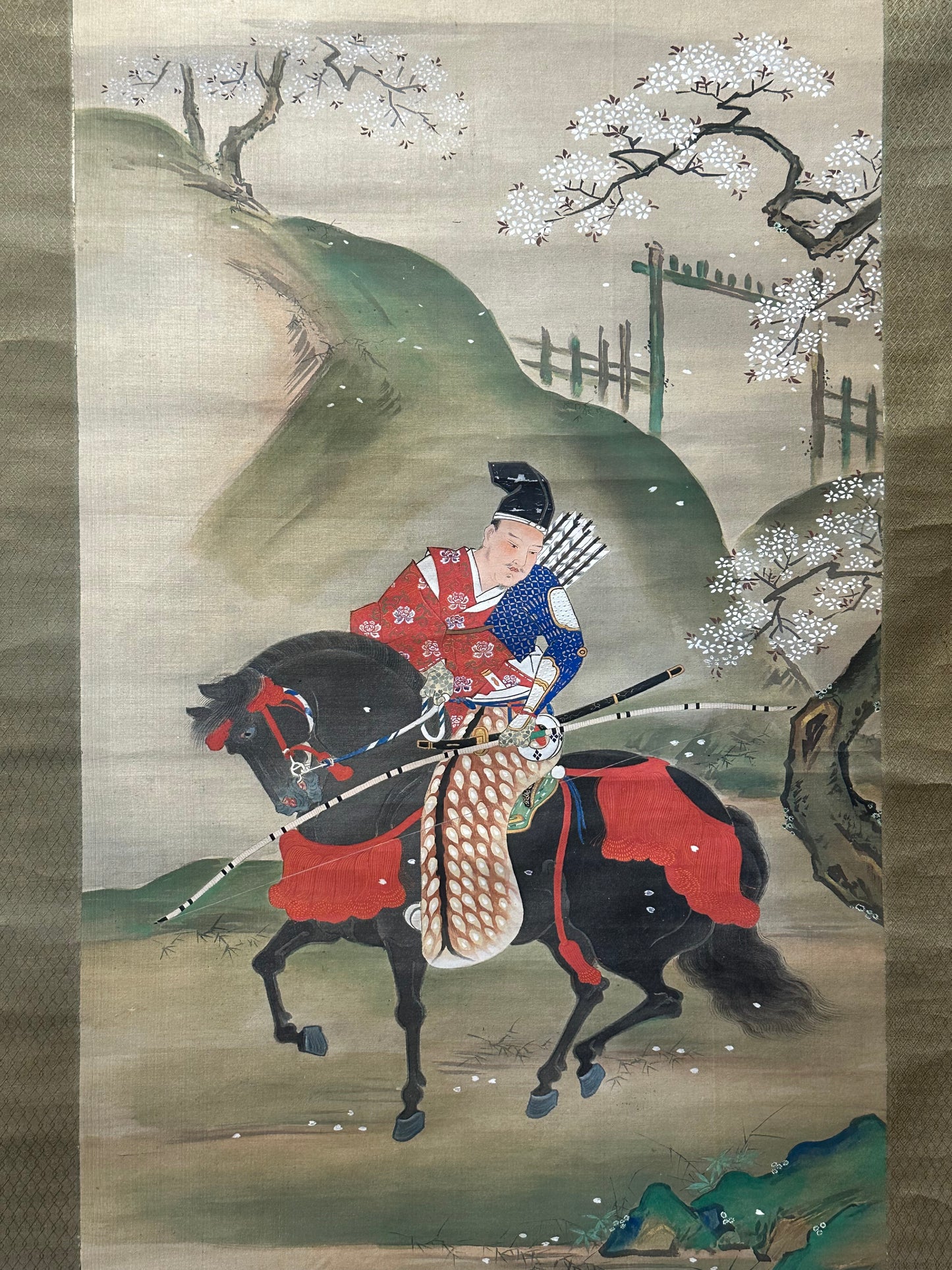
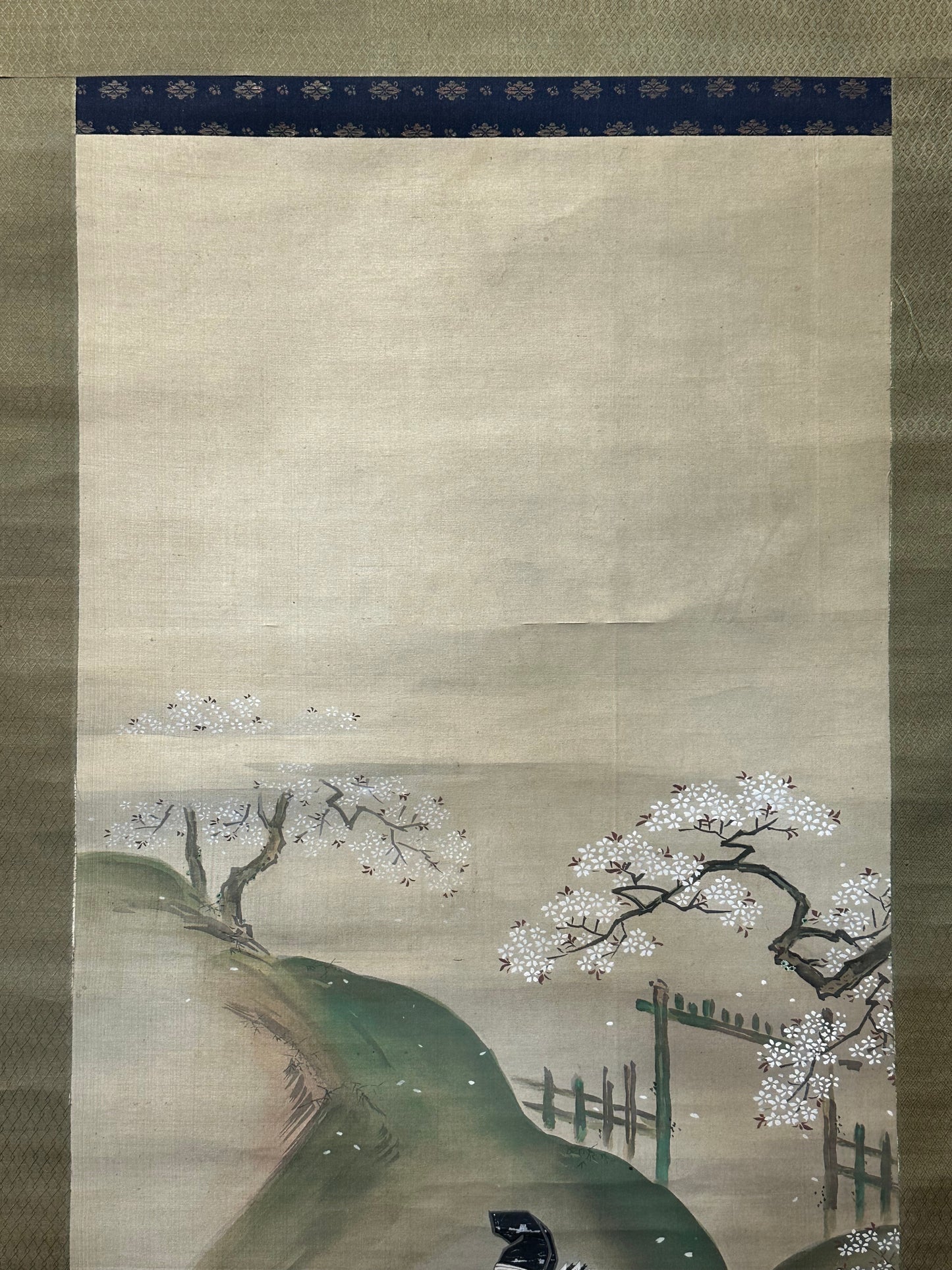
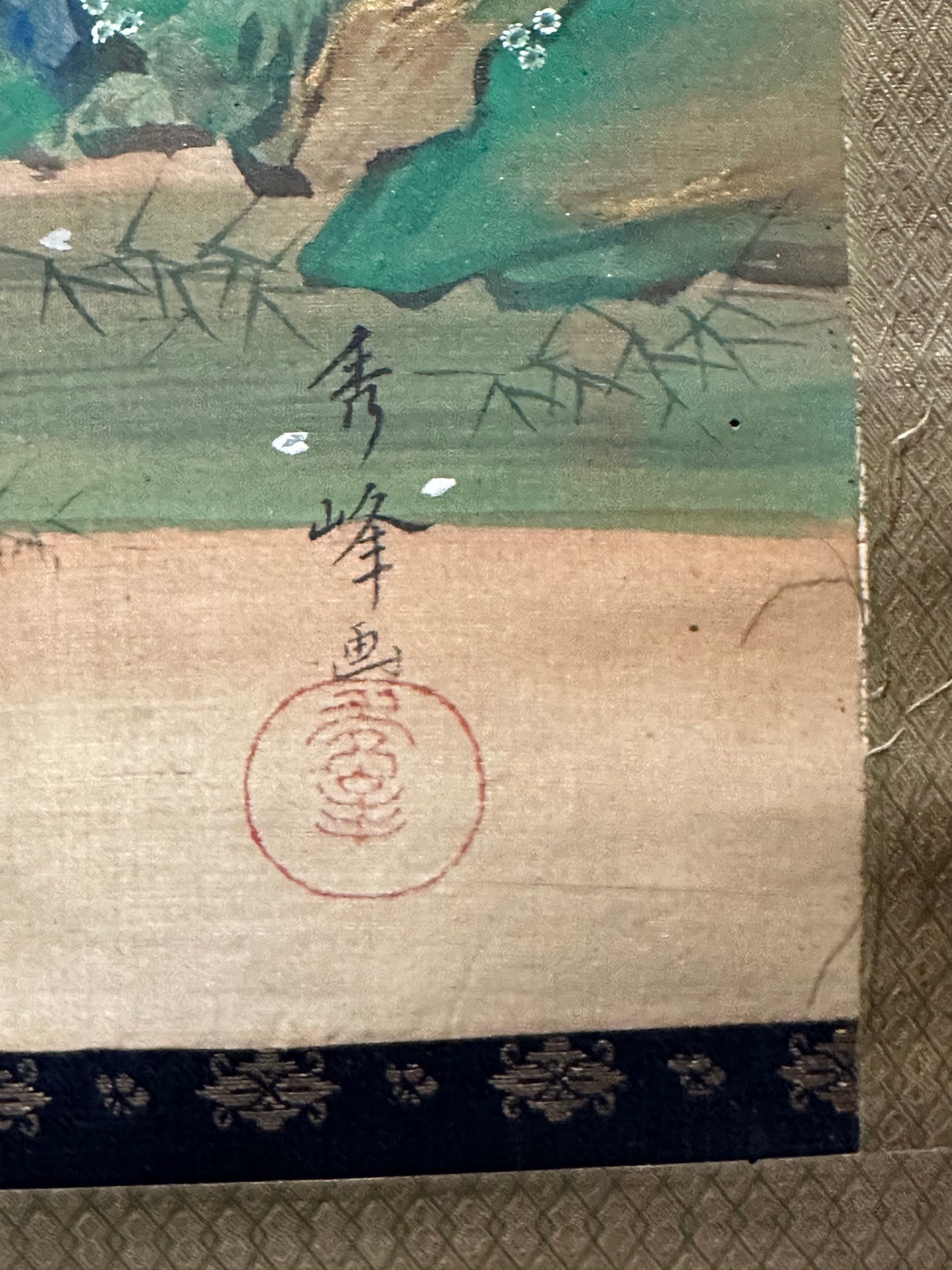
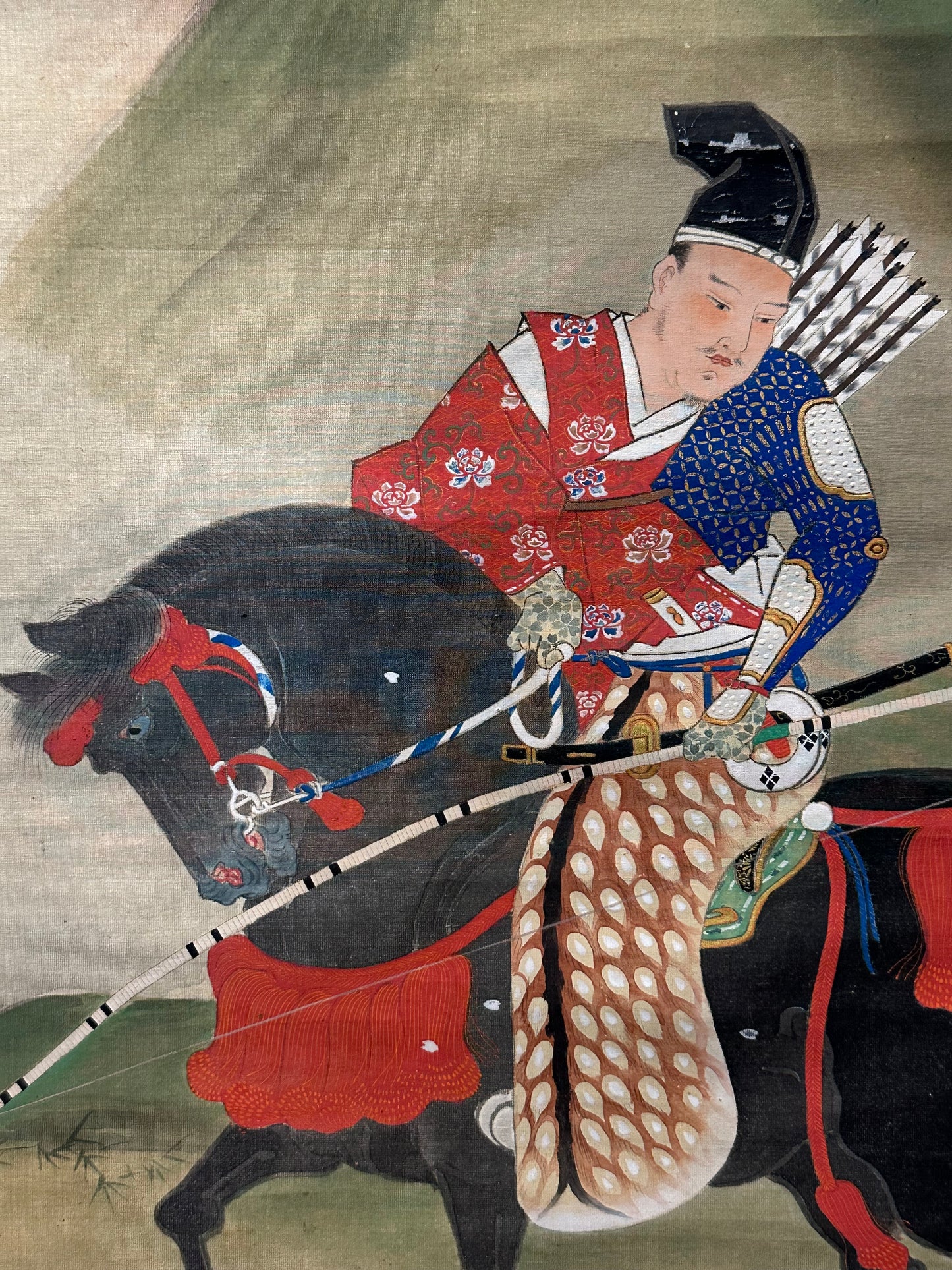
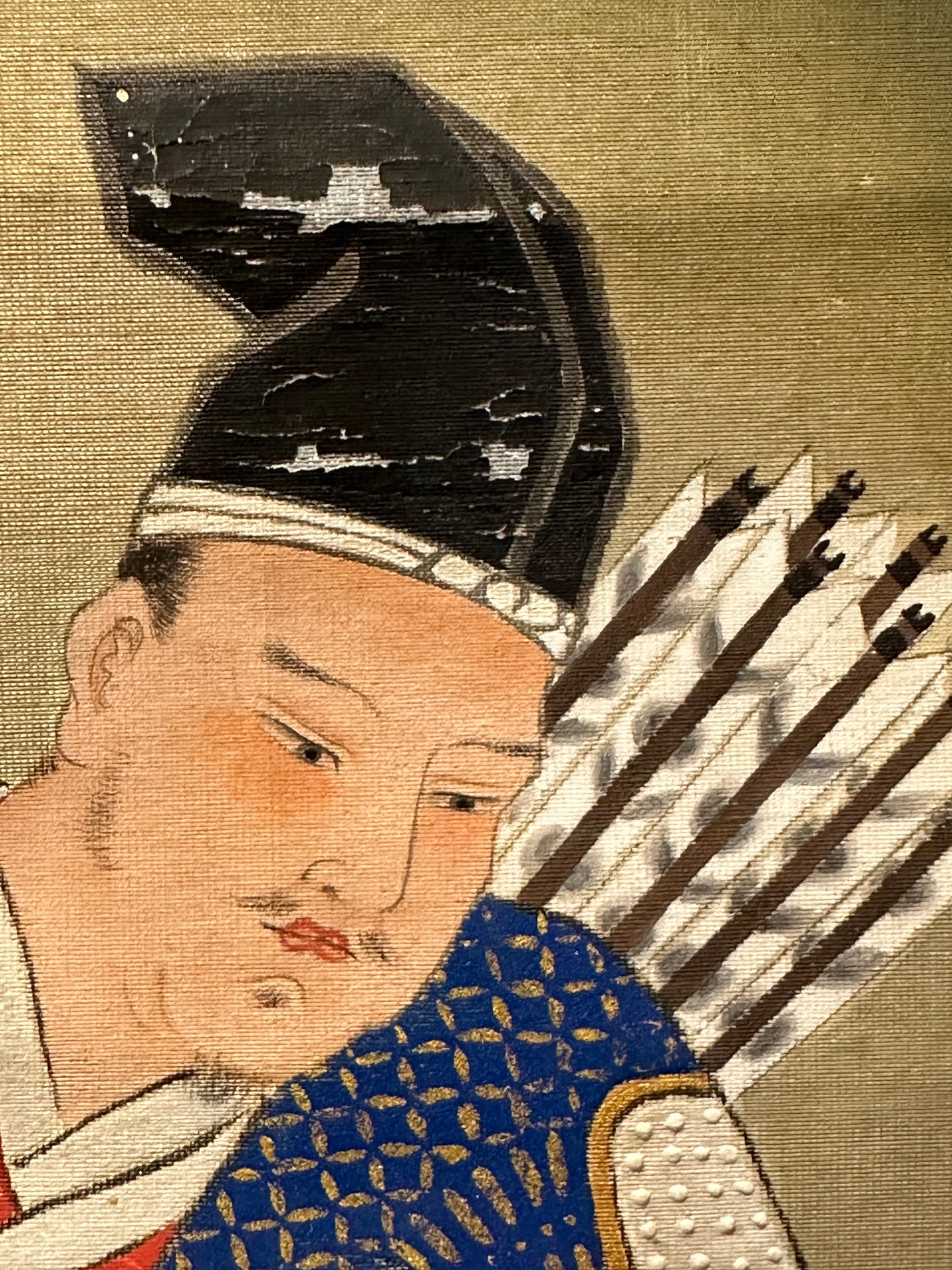
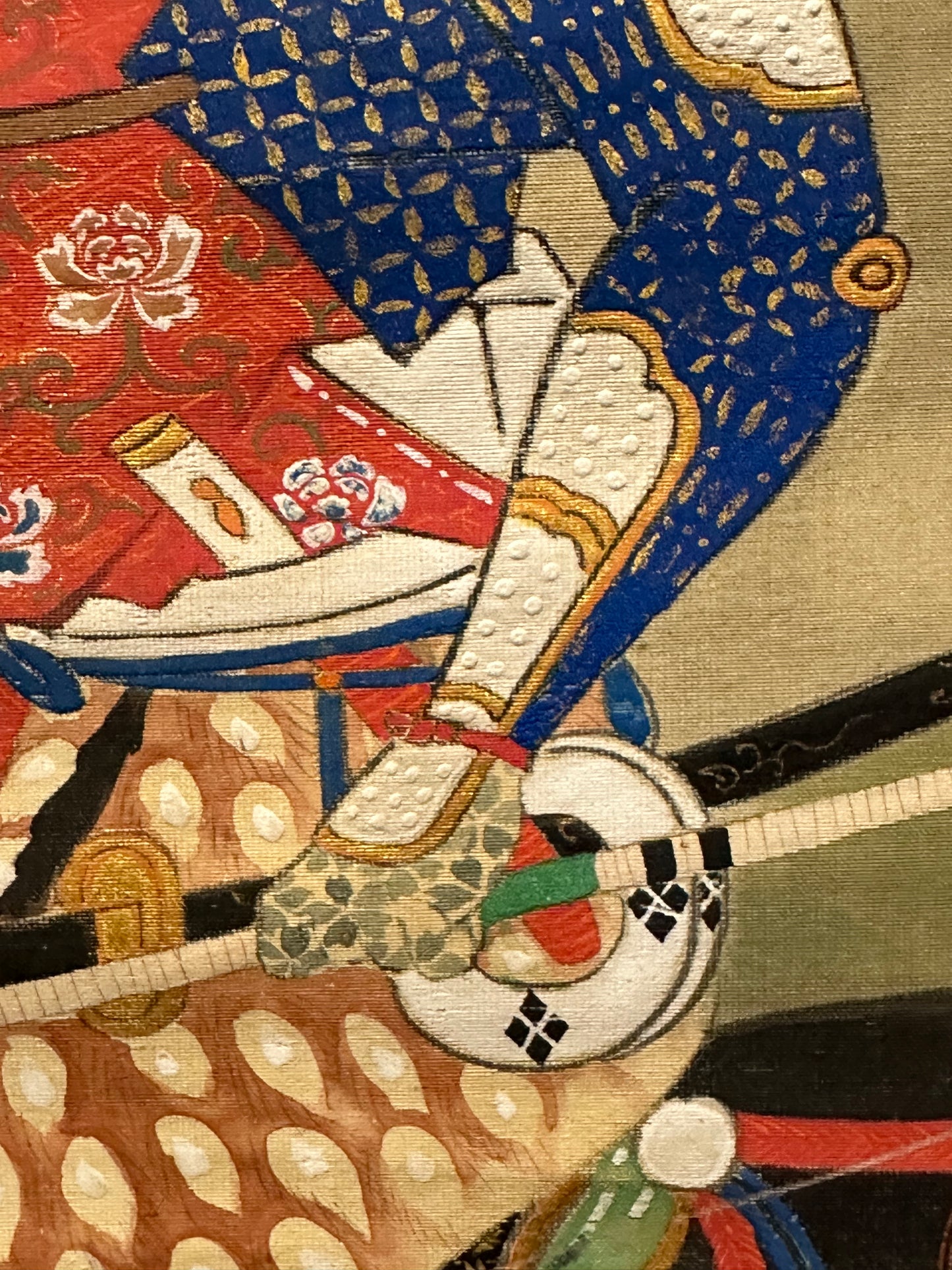
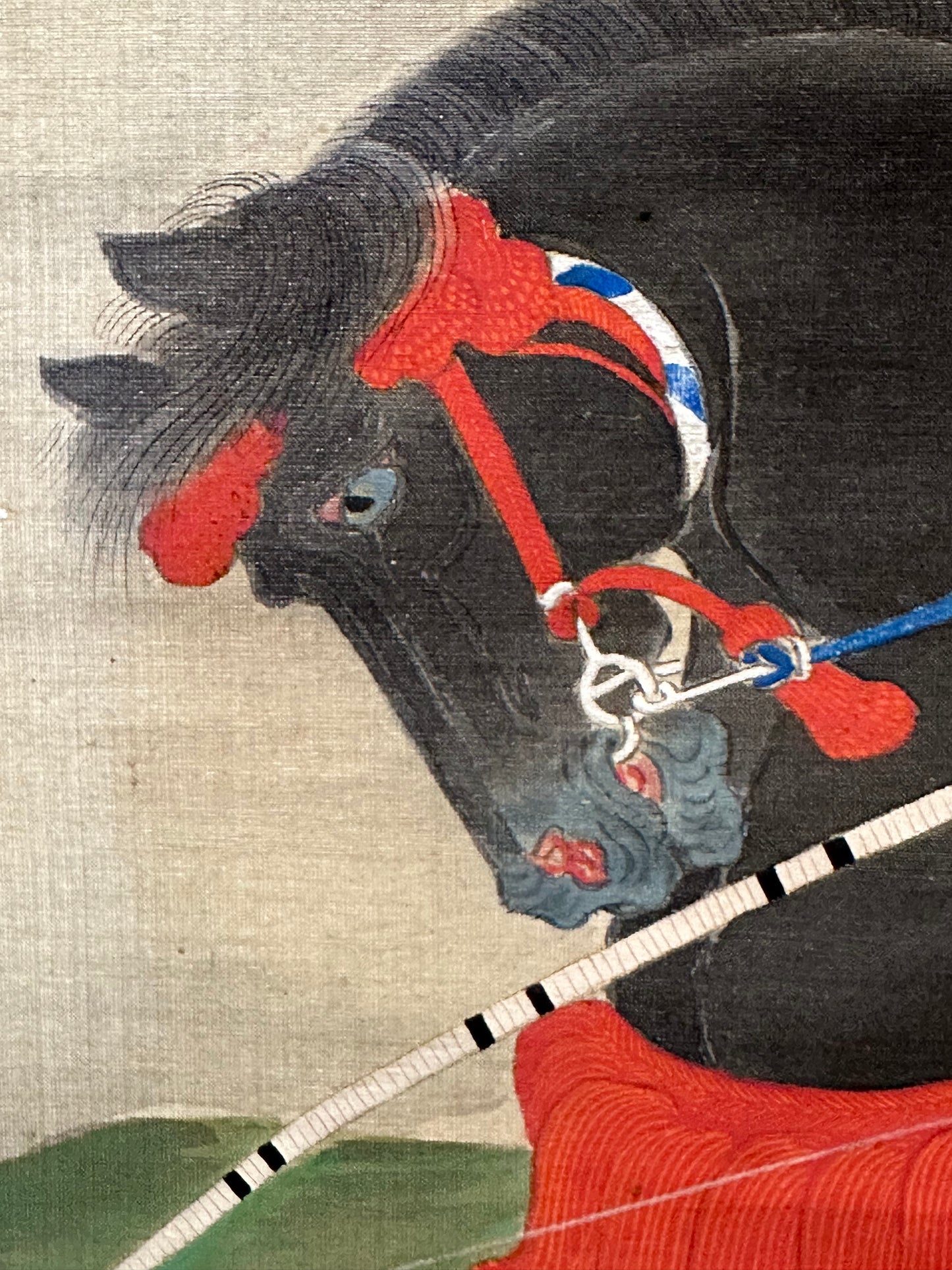
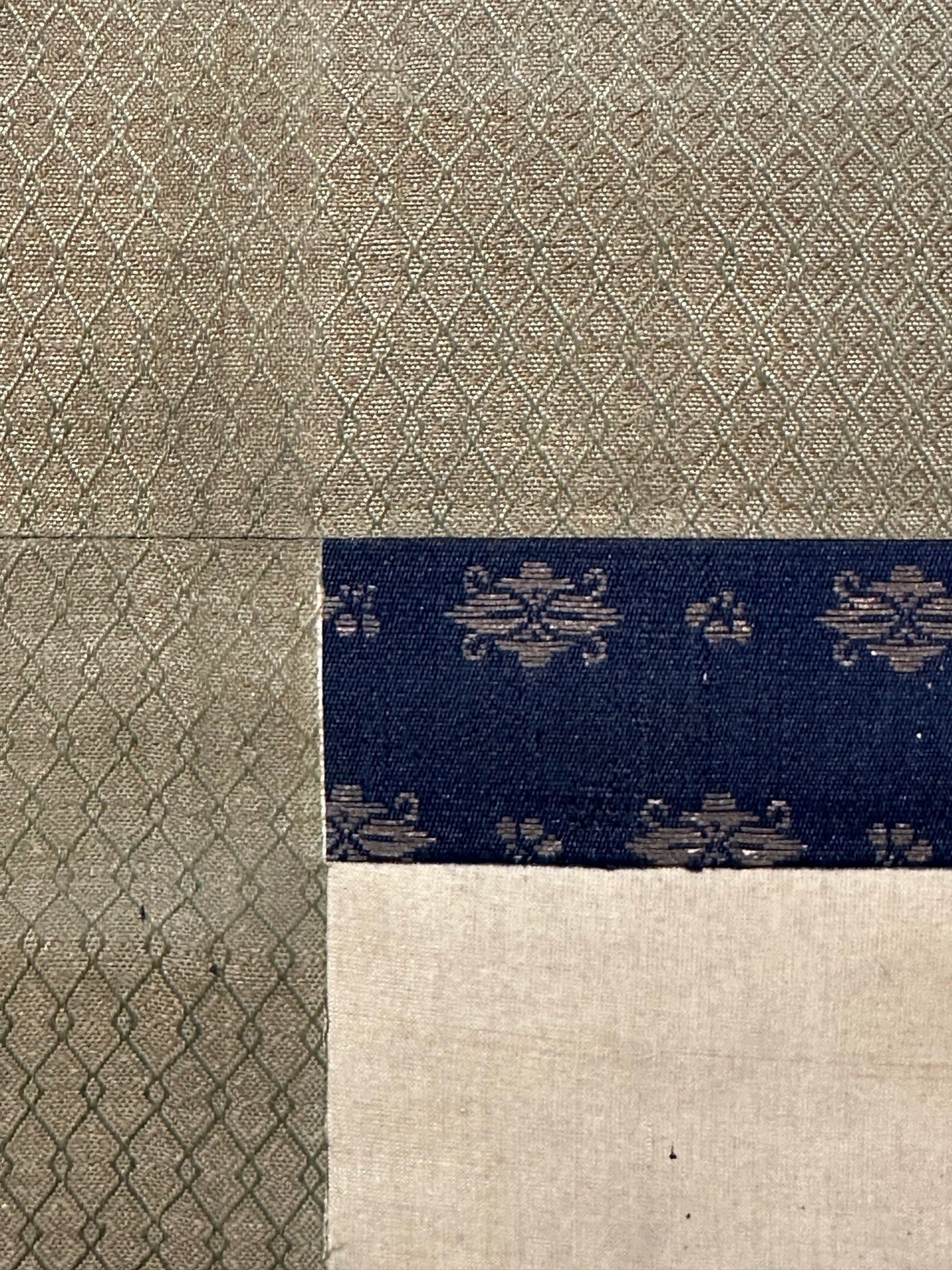
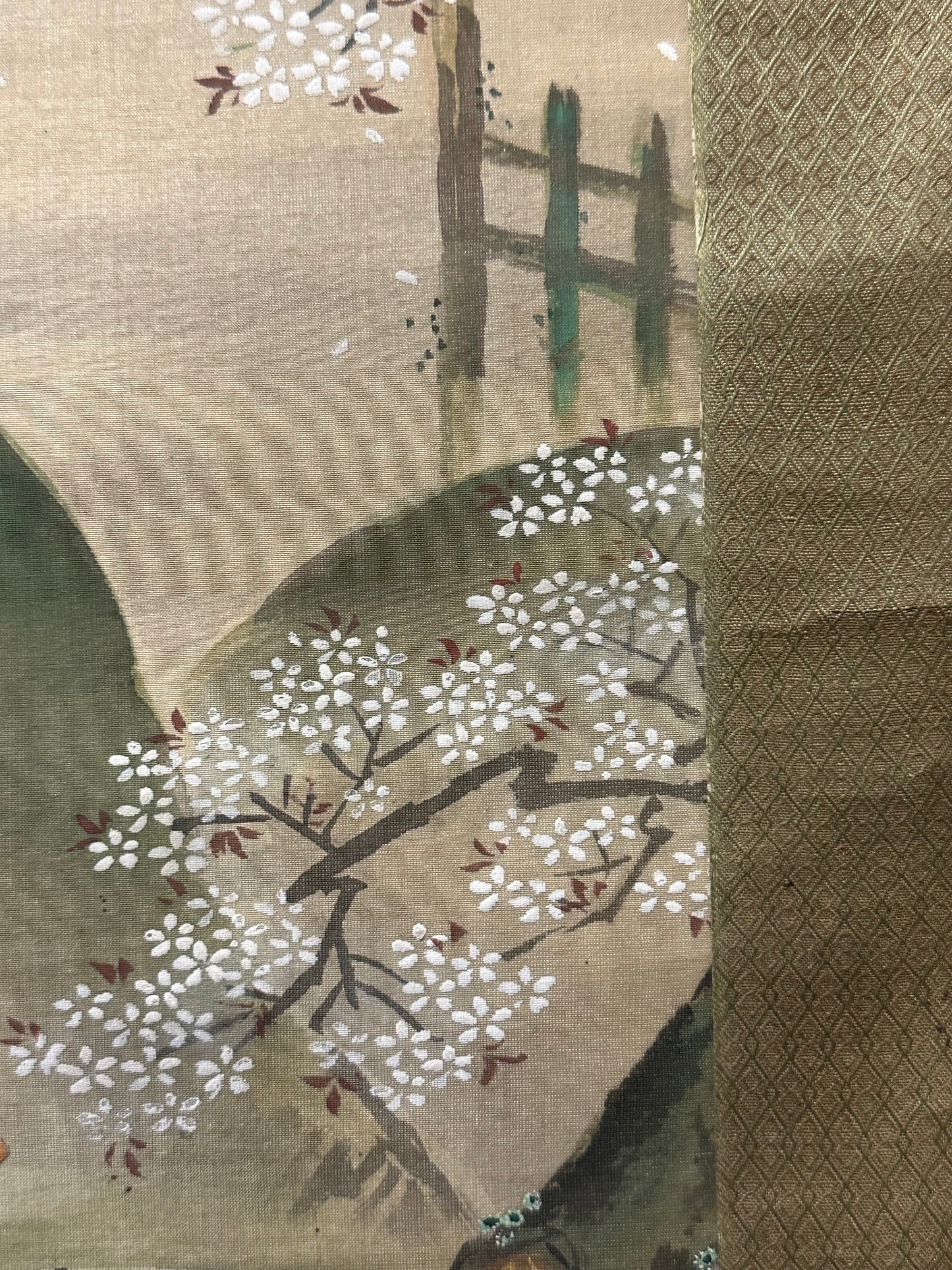
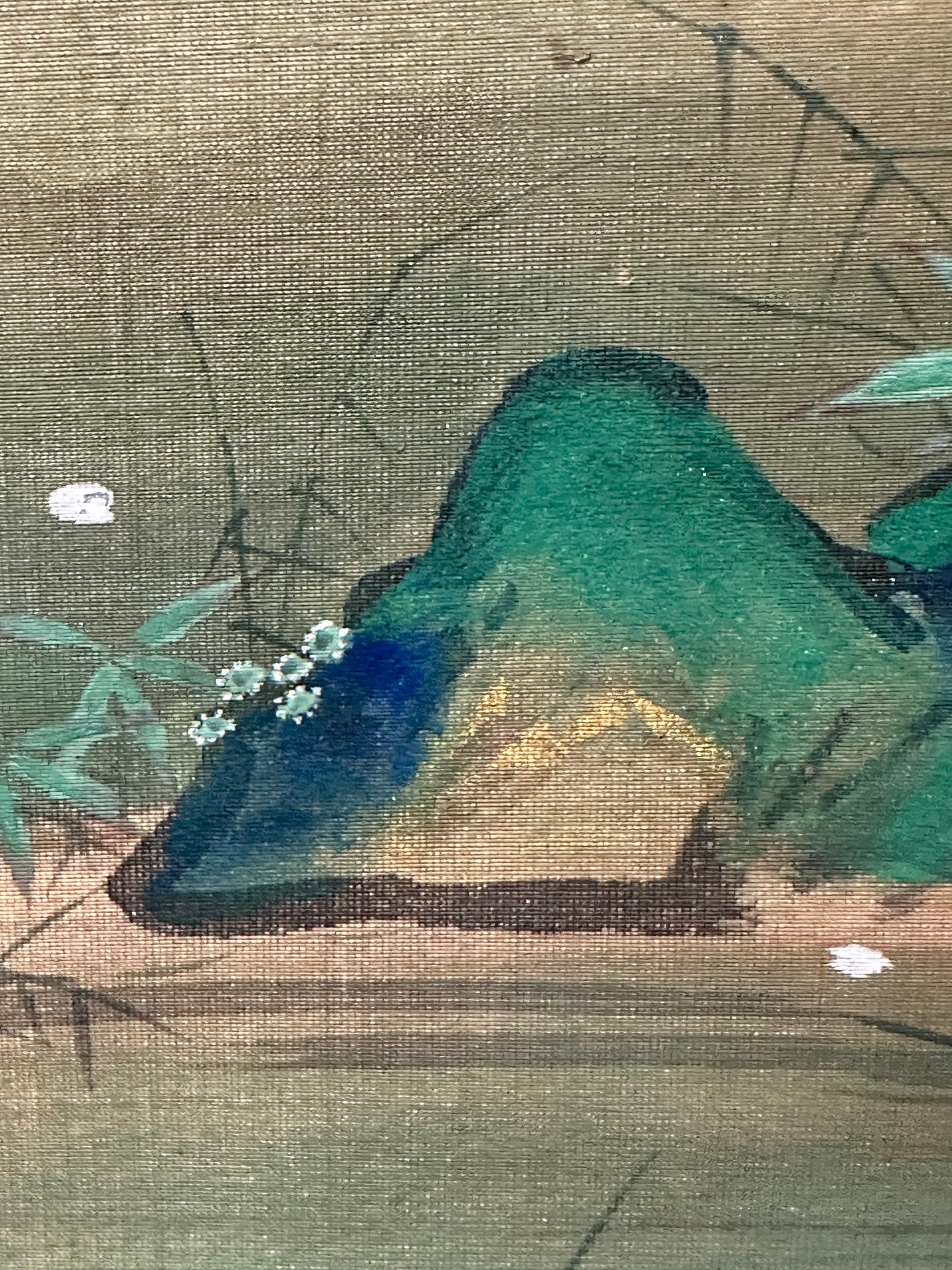
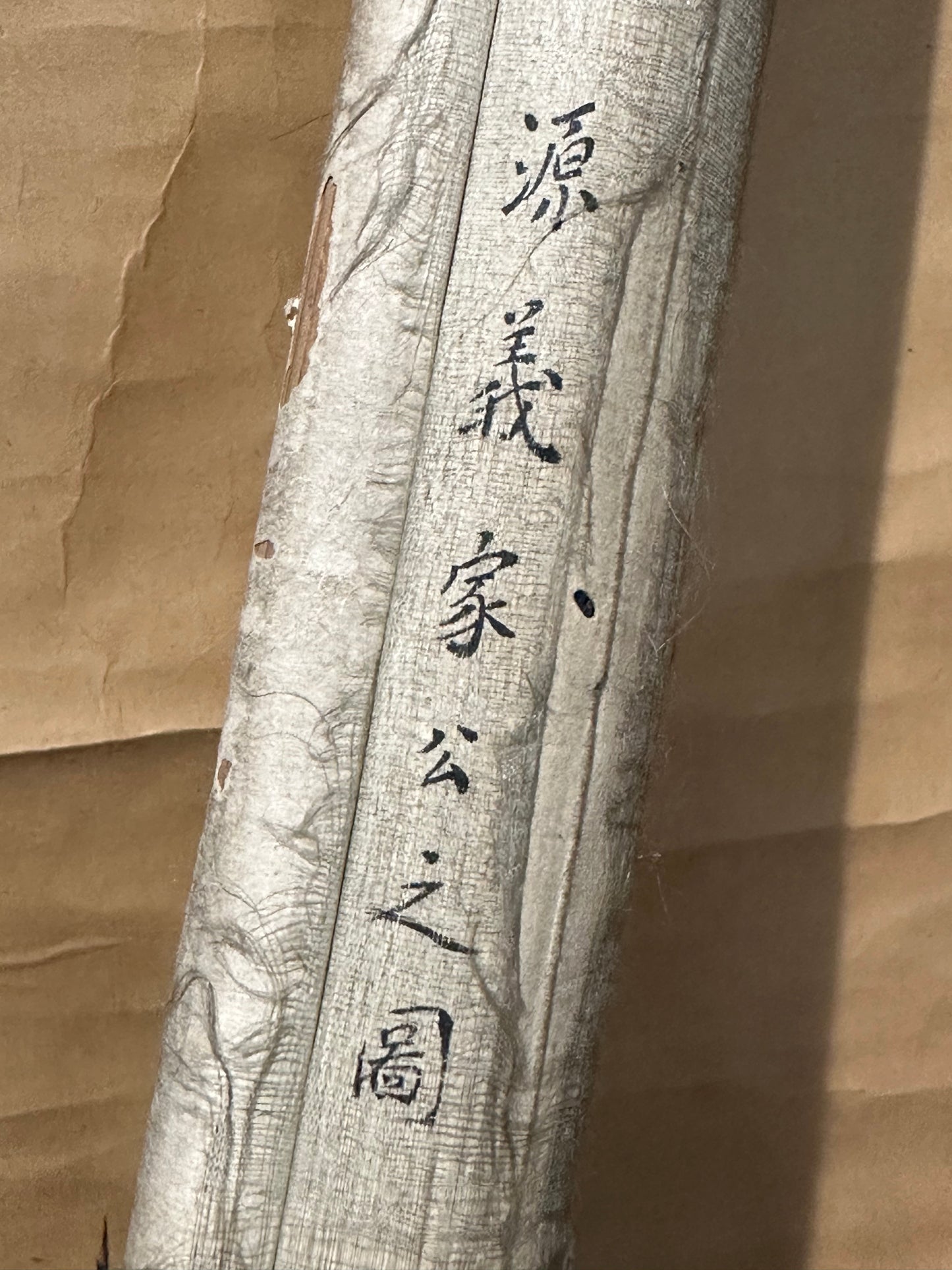
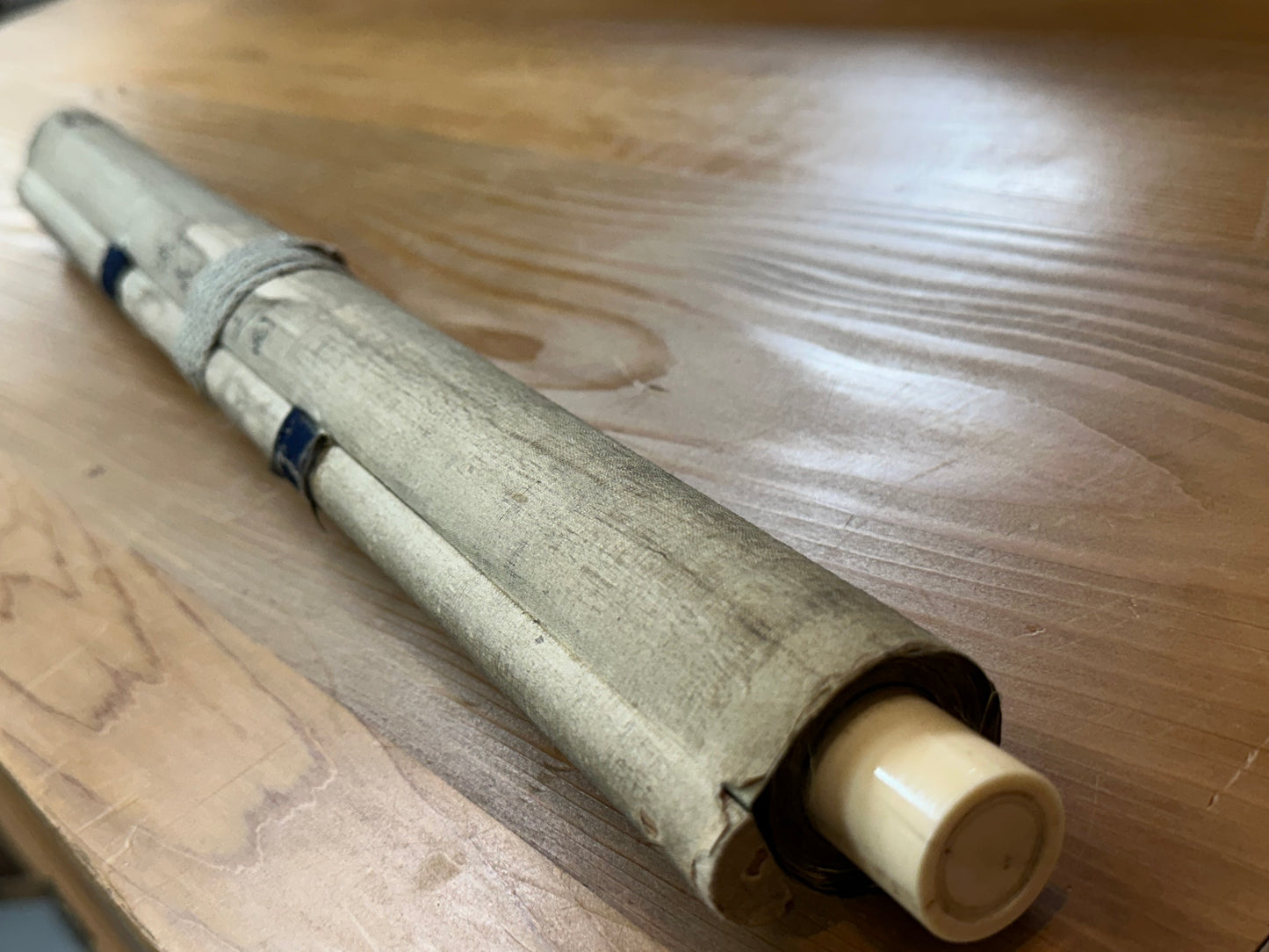
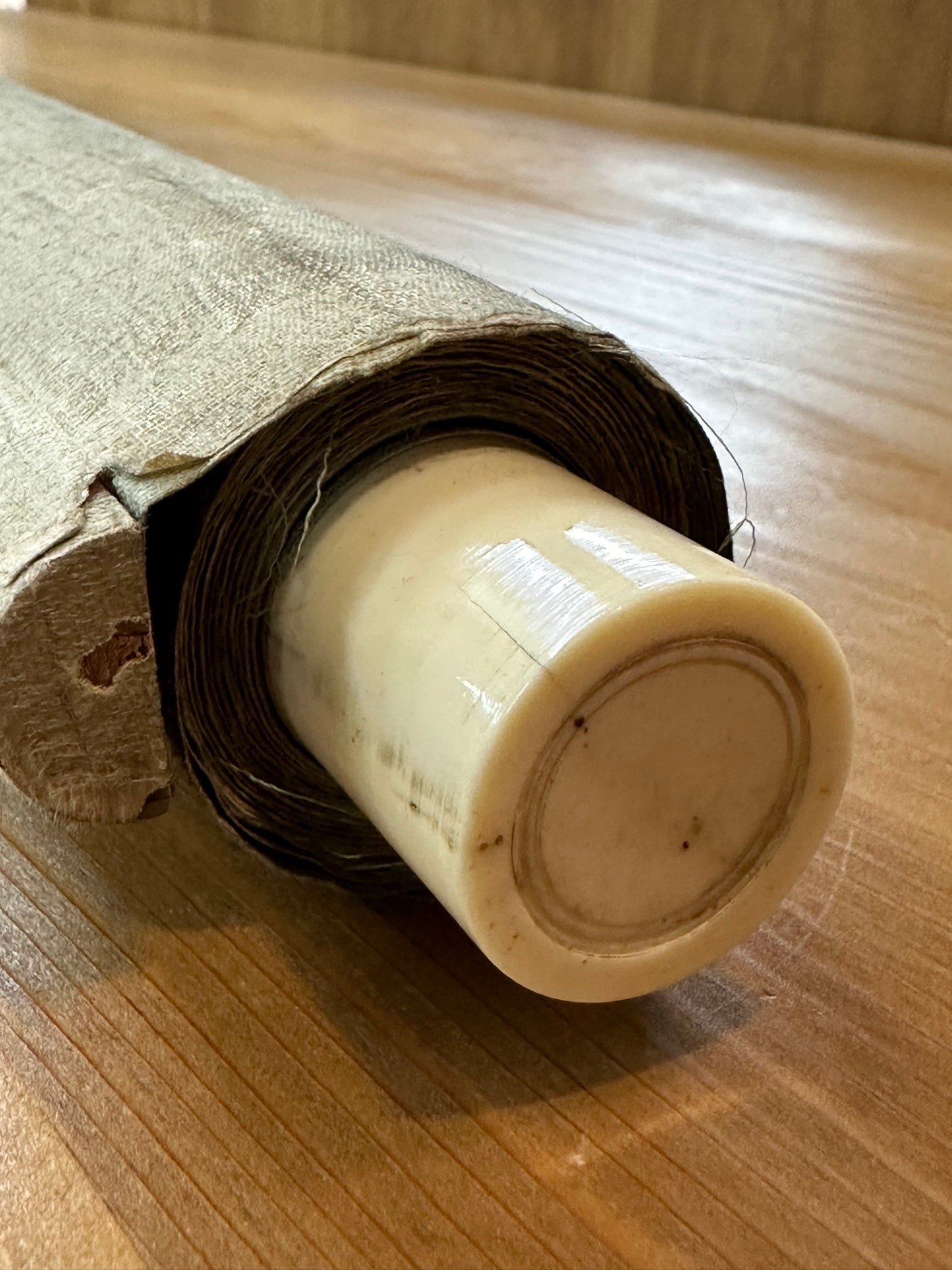
Painted in ink and mineral pigments on silk, this kakejiku (掛け軸) depicts Minamoto no Yoshiie (源義家, 1041–1108) — the celebrated Heian-period warrior commander known as Hachiman Tarō, "Eldest Son of the God of War" — mounted on a black horse at full stride beneath blossoming cherry trees. Yoshiie wears formal court-military dress: a red and white kariginu patterned with chrysanthemum roundels over a blue kikko-patterned yoroi keikogi, with a lacquered eboshi crowning his head. He carries a full quiver of arrows and holds his yumi at the diagonal, conveying both martial readiness and aristocratic composure. The saddlecloth is rendered in warm ochre with a repeating teardrop motif; the horse's tack includes red lacquered fittings. The cherry blossoms scattered throughout the composition allude to one of the most celebrated episodes in Yoshiie's legend: his pause near the Nakoso Barrier on his return from northern campaigns, where he composed a poem on the falling petals — an image that became inseparable from his heroic persona in the Meiji-period revival of samurai iconography. Background elements of rolling hills and a bamboo fence situate the subject within the classical yamato-e narrative tradition. The painter's signature, 秀峰 (Shūhō), appears in the lower left with a red intaglio seal. Mounting is in two-panel brocade — a fine gold diamond-weave silk with an indigo floral accent band — with bone jiku-saki finials. The title is inscribed 源義家公之圖.
Condition: Silk shows age-appropriate toning. Minor flaking to the lacquer of the eboshi; light soiling to the outer wrapper. Painting surface otherwise intact with strong, unfaded color. Mounting sound.
A handsome example of Meiji-period figurative painting in the classical tradition, depicting one of Japan's most celebrated warrior-heroes in a setting of springtime splendor.