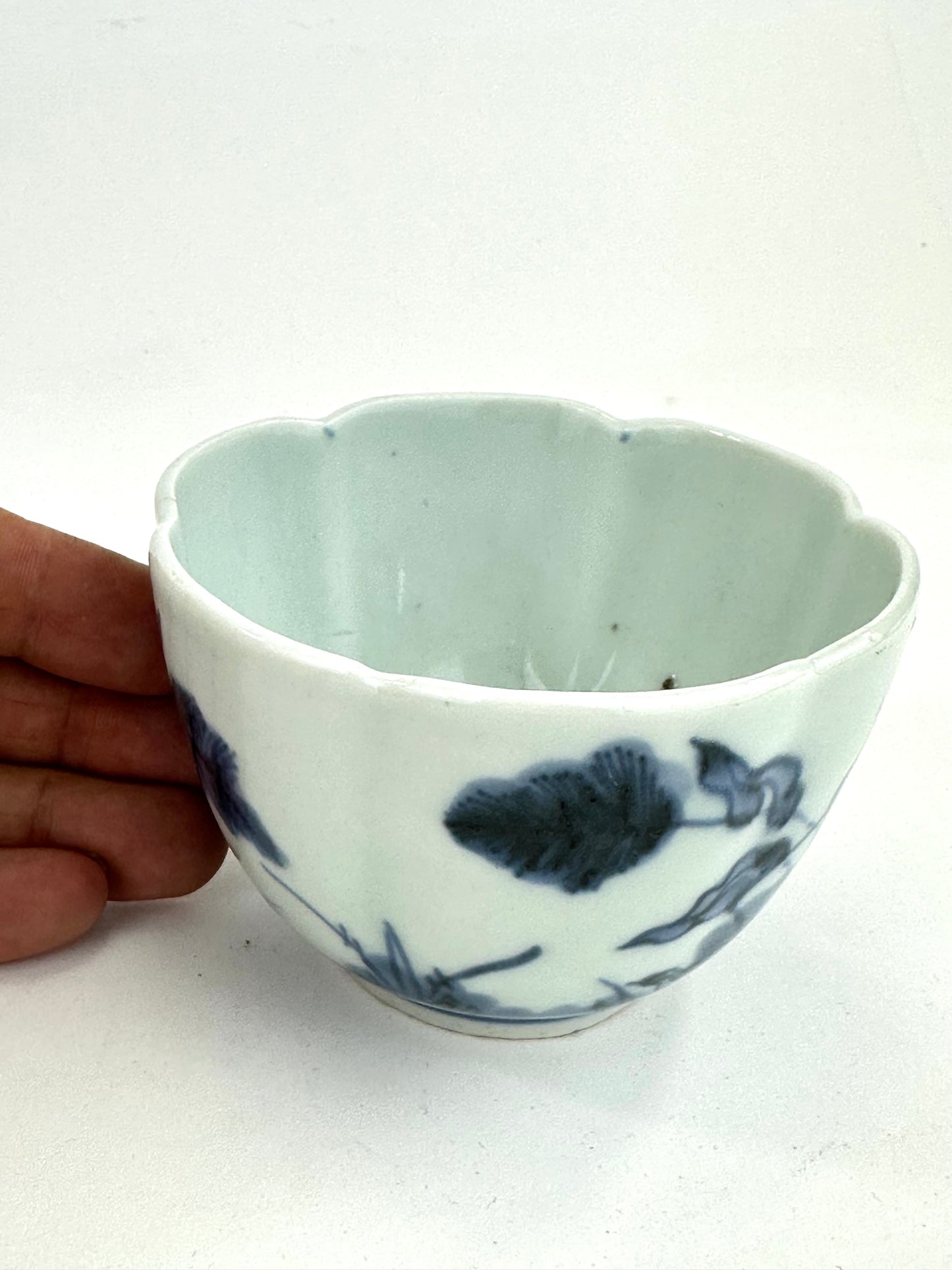


Japanese Edo Period c1850's Arita Blue & White Flower Teacup Hand Painted Hairline 3"W
Japanese Edo Period c1850's Arita Blue & White Flower Teacup Hand Painted Hairline 3"W
Couldn't load pickup availability
Antique Japanese Blue & White Porcelain Teacup – Chrysanthemum Lobed Form – Edo Period (c. 1800–1850)
Dimensions: approx. 3.25″ diameter × 2.5″ H
A beautiful hand-painted blue-and-white porcelain teacup with a six-lobed chrysanthemum rim and interior double-ring medallion featuring a floral crest. The exterior decoration shows a flowing botanical scene executed in soft underglaze cobalt, typical of late Edo aesthetics—light, airy brushwork conveying seasonal grasses and wildflowers bending in the wind.
The foot bears a hand-painted kiln mark, and the porcelain body shows the subtle glaze pooling and painting variation characteristic of early- to mid-19th-century production.
The rim is shaped in a kiku-gata (chrysanthemum) motif, a classical symbol of longevity, imperial authority, and autumn beauty in Japan.
Condition
Visible hairline stabilized with age-appropriate discoloration (see photos); minor glaze inclusions and firing marks typical of hand-crafted Edo ceramics; no rim chips; structurally sound.
Provenance & Use
Originally used for tea or sake service, these refined small bowls were part of elite household tableware or used in seasonal gatherings. Today they display beautifully as part of a ceramic collection or wabi-sabi interior setting.
A graceful example of Edo-period Japanese porcelain, valued for its form, handwork, and poetic natural motif.