

Japanese Edo Period Momonari Kabuto Samurai Helmet Red Lacquer w/ Crescent Moon Maedate LS#157
Japanese Edo Period Momonari Kabuto Samurai Helmet Red Lacquer w/ Crescent Moon Maedate LS#157
Couldn't load pickup availability
Online Listing
Suji-lacquered Momonari Kabuto (桃形兜) with Ressei Hanbō and Ashikaga Crest (Edo period)
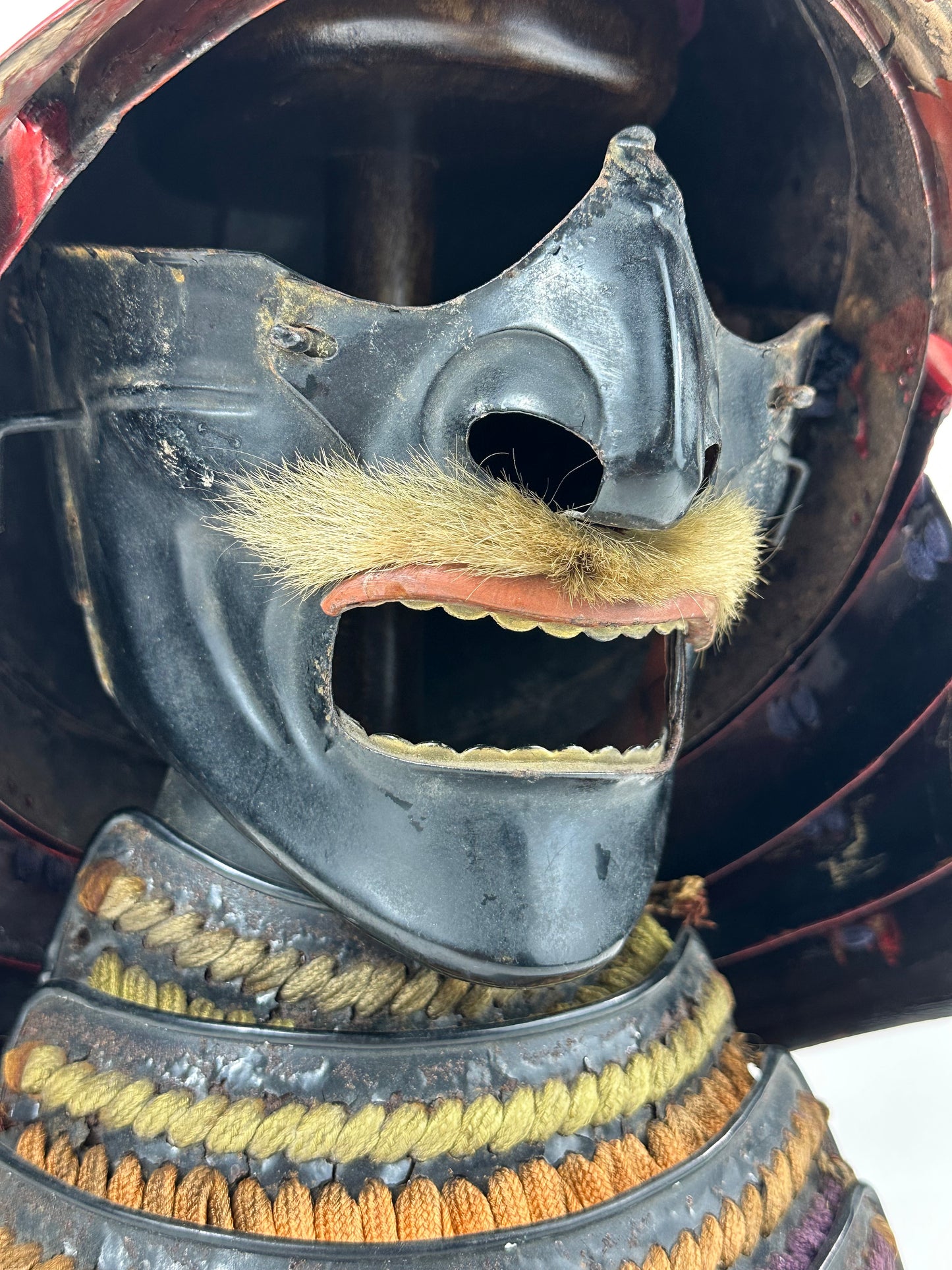
A striking red-lacquered momonari kabuto presented with its iron half-mask (ressei hanbō) and a broad hineno-jikoro. The bowl is the peach-shaped momonari type with a tall medial ridge and extended mabisashi. Exterior is finished in deep red urushi; the interior retains darker lacquer. Small fukigaeshi carry a round crest with two horizontal bars in a circle, identified as the Ashikaga clan mon, “maru-ni futatsu-hiki” (丸に二つ引). Three-lame side plates of the shikoro are lacquered red to match; the underside is black lacquer, and the lacing is dark-blue sugake-odoshi. The accompanying ressei hanbō has a bold nose ridge, pierced nostrils, and a natural-hair moustache above a four-lame yodarekake in mixed cords.
Dating and context
The momonari form emerges in the late 16th century to deflect downward blows and shed rain. Red lacquered armor becomes a hallmark of elite warlords and remains fashionable in the Edo period for guard and processional display. Construction and finishes here point to the 18th–19th century.
Crest and fittings
The painted Ashikaga crest, “maru-ni futatsu-hiki” (丸に二つ引), is crisply rendered on both fukigaeshi. The set also includes a separate gilt crescent-moon maedate, currently broken and under professional repair; inclusion of the repaired maedate will be noted on the receipt.
Condition (from the photographs)
Even, attractive red urushi with scattered scuffs and small losses consistent with age; mount hole at the crown for a crest; shikoro lames straight and sound with good lacquer; lacing complete; mask with stable patina and intact moustache. Interior shows expected wear from use and re-lining. A coherent, display-ready ensemble.
Details
Type: Momonari kabuto with ressei hanbō
Period: Edo period, likely 18th–19th century
Materials: Iron and leather, red/black urushi, silk/cord lacing, natural hair moustache
Neck guard: Hineno-jikoro, multi-lame, dark-blue sugake-odoshi
Crests: Ashikaga mon “maru-ni futatsu-hiki” (丸に二つ引) on fukigaeshi; separate gilt crescent-moon maedate included (under repair)
Dimensions: H 14in, W 12in, D 10in
LS157
Item Label
Momonari Kabuto with Ressei Mask, red lacquer; Ashikaga crest “maru-ni futatsu-hiki” (丸に二つ引)
Japan, Edo period, 18th–19th century
Iron and leather with red/black urushi; hineno-jikoro with dark-blue sugake-odoshi; ressei hanbō with four-lame yodarekake and moustache. Separate gilt crescent-moon maedate included (broken, under repair).
Dimensions:
LS157
Museum Card
Momonari Kabuto with Mask and Jikoro, Ashikaga Crest
Japan, Edo period (c. 1700s–1800s)
Iron, lacquer, silk cord; painted Ashikaga crest “maru-ni futatsu-hiki” (丸に二つ引) on fukigaeshi; ressei hanbō with yodarekake
Dimensions:
The peach-shaped momonari bowl with a high central ridge reflects late Sengoku innovations favoring smooth, deflecting surfaces and extended visors for weather protection. Red lacquered finishes became symbols of boldness and authority and continued into the Tokugawa period for guard and processional use. This example retains its hineno-jikoro with dark-blue sugake lacing and a fierce ressei half-mask with moustache. A separate gilt crescent-moon crest accompanies the set and is presently under repair. The round crest with two horizontal bars, “maru-ni futatsu-hiki” (丸に二つ引), identifies the Ashikaga mon long associated with the shogunal line and its branch families.
LS157