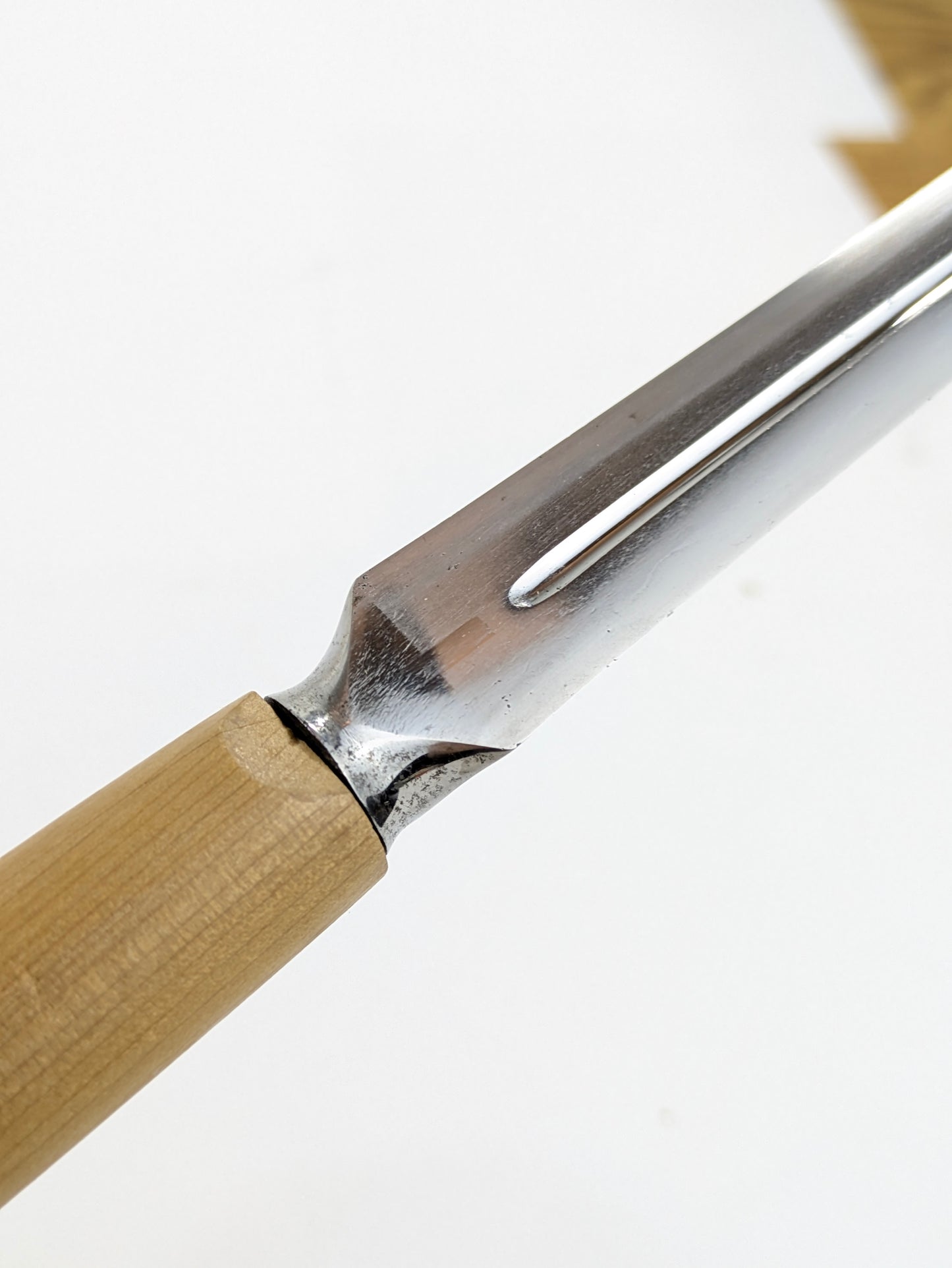


Japanese Yari Spearhead Signed Monju Kanehisa Edo Genroku Period 1688–1704
Japanese Yari Spearhead Signed Monju Kanehisa Edo Genroku Period 1688–1704
Couldn't load pickup availability
Yari (Spearhead) by Monju Kanehisa
文殊(文珠)包久作
Japan, Mino Province (Seki), Genroku period, 1688–1704
Forged steel spearhead; tang with chiseled mei
Dimensions: 23in long, 4.5in blade
Five-character mei reading 文殊(文珠)包久作 — Monju Kanehisa saku. The “Monju” epithet (after the bodhisattva Manjushri) is characteristic of the Seki schools of Mino Province, and this spearhead is consistent with late-17th-century workmanship from that tradition.
More than a blade style, the yari was the primary Japanese polearm for centuries: a thrust-dominant weapon mounted on a long hardwood haft, effective in both formation fighting and close quarters. Ashigaru infantry used very long pikes to control distance and break cavalry; samurai employed shorter mounts for guard, patrol, and dueling techniques. By the Genroku era under Tokugawa peace, yari also served in processional and guard roles, yet remained fully functional arms. This head would originally have been fixed to a lacquered pole with metal ferrules, creating a light, rigid spear capable of precise thrusts, parries, and binding actions along the shaft.
The present example bears a narrow, well-finished tang with a clear chiseled inscription. Steel shows tight forging and crisp edges appropriate to Seki work. A documented mei of Monju Kanehisa supports an attribution to Mino (Seki tradition) during the Genroku period.
Details
-
Type/Title: Yari (spearhead)
-
Signature (mei): 文殊(文珠)包久作 (Monju Kanehisa saku)
-
Period: Genroku, early Edo (1688–1704)
-
Province/School: Mino Province (Seki tradition)
-
Material/Construction: Forged steel spearhead; tang (nakago) with chiseled mei
-
Dimensions: 23in long, 4.5in blade
-
Condition: Well-preserved tang and inscription; edge and surfaces consistent with age
-
Notes: “Monju” appears written with 殊 or 珠 in period variants; both read